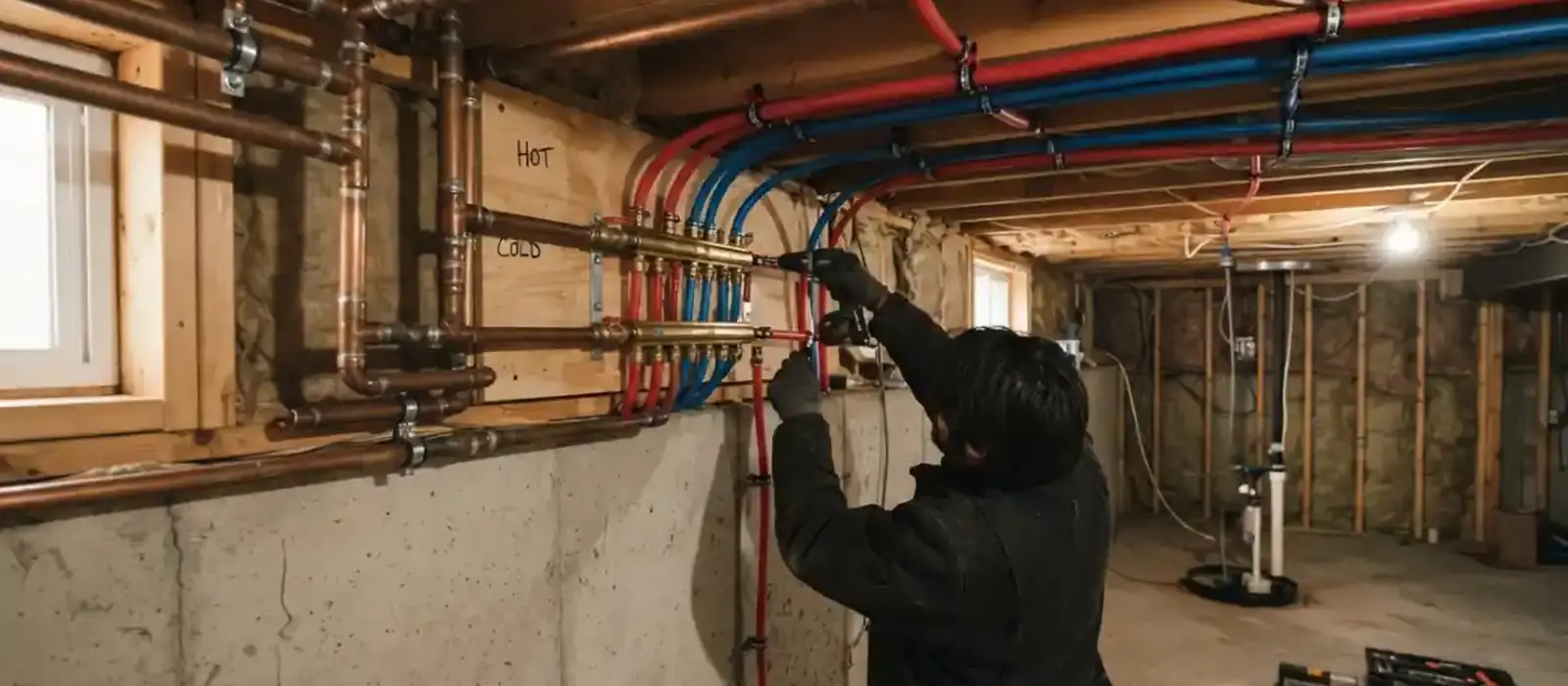
Why Wareham homes end up on the repipe list
Wareham's housing plan counts about 20 percent of homes as built in 1939 or earlier, and many more from the 1940s and 1950s. Pipes from those decades were often galvanized steel, which rusts from the inside until the bore shrinks and the pressure drops. Where original lines were replaced later, they were often copper, and copper has its own age limits.
The town also has a large seasonal housing stock, with cottages that sit closed through winter. A cottage that was not fully drained may have patched splits in several places, and by the third or fourth repair, replacing the run is less trouble than chasing the next leak.
Signs your pipes are near the end
One leak does not mean a repipe. A pattern does, and these are the patterns that usually push the conversation that way.
Rusty or brown water at the tap
Galvanized pipe sheds rust, and the color often shows first after the water has sat overnight. If it clears quickly, the rust is likely in the pipe. A tank that is rusting out shows up differently.
Pressure that fades over the years
Corrosion builds up inside galvanized steel and narrows the passage. Hot and cold lines to the same fixture may differ, because they age at different rates.
Pinhole leaks in copper
Small green or white crusts and tiny sprays appear at several spots. One pinhole can be soldered. A run of them suggests the pipe wall is wearing everywhere.
Patches that keep coming back
Repairs along the same line, especially in a wall or under a floor, tell you the pipe is the problem, not the fitting.
PEX or copper: the honest comparison
Both are good materials, and either can serve a house for decades when installed properly. The best choice depends on your house, your budget and how you plan to use the space.
PEX tubing
- Flexible, so it threads through walls with fewer cuts in the drywall and fewer fittings
- Tolerates a freeze better than rigid pipe, though it can still split at fittings
- Joined with crimp or expansion fittings, with no open flame
- Degrades in direct sunlight, so it stays covered and is not meant for exposed outdoor runs
Copper
- Rigid, durable and trusted for generations, with a long record in Massachusetts homes
- Resists UV and can run exposed in basements and utility spaces
- Takes more labor to install, and joints are soldered
- Can develop pinholes in some water chemistry, so ask your district about its treatment
Wondering if a repipe is the right call?
Describe the leaks, the pressure and the age of the house. We tell you honestly whether to repair, partly repipe or replace everything.
Old galvanized and copper in houses from 1939 and earlier
A house from that era may have had its water lines replaced once or twice, so you can find several materials in one basement: galvanized steel at the original runs, copper from a later update, and a modern plastic section where someone repaired a leak. Mixed metals meet at fittings that corrode when they touch, which is why a proper dielectric union or transition fitting is part of the job.
Wareham's water districts treat their water for corrosion control, with lime and sodium hydroxide named by the districts' own reports, but that treatment cannot undo decades of rust inside a pipe. If you want the district's current water quality information before choosing a material, ask the Wareham Fire District or the Onset Fire District for its report.
Full repipe, partial repipe or repair
Many homes do not need the whole house done. The table shows how we usually think about the choice.
| Situation | Usual approach | Why |
|---|---|---|
| One leak in otherwise sound copper | Repair the leak | The rest of the pipe has years of service left |
| Galvanized lines throughout, low pressure | Full repipe | The restriction is everywhere, so repairs cannot restore flow |
| Freeze damage in one cottage wall | Replace that run, check the rest | The damaged section is isolated, but we pressure test the whole system |
| Pinholes in several rooms | Full or large partial repipe | Pinholes at multiple points show the pipe is failing along its length |
| Renovation with walls already open | Replace what is exposed | It is far cheaper to replace pipe while the wall is open |
How a repiping project runs
The work is planned, so you can schedule it. A typical project runs in this order.
- 1
Assessment
The plumber looks at the pipe material, the shutoff valves, the water heater connections, the pressure and the places where pipe passes through framing. We run a pressure test and check for leaks with leak detection if the symptoms are unclear.
- 2
Plan and price
You get a written scope, the route the new pipe will take, the number of access openings and a clear price before work starts.
- 3
Permit
The plumber files the permit with the town. Under 248 CMR 3.05, permits are issued only to licensed plumbers, and in Wareham the plumbing inspector works out of Inspectional Services at 54 Marion Road.
- 4
Install and test
New pipe is run, fittings are made, and the system is pressure tested before any wall is closed. The inspector checks the work.
- 5
Reconnect and hand over
Fixtures and the water heater are reconnected, the water is flushed, and you get notes on the shutoff valves and any other issues we noticed.
What a repipe does to your walls
Opening walls is part of the job in many houses, though newer flexible tubing can reduce how many holes are needed. A plumber makes access cuts at key points, feeds the new lines through and leaves openings for the building trades to close.
Patching drywall, repainting and finishing floors are not our trade, so plan for a drywall contractor afterward. Ask in the quote how many openings are expected and where, so you know what to budget for. If your home has plaster over lath, tell us before the visit, because that finish needs particular care.
What drives the price of a repipe
You get a clear price before work starts. A repipe is priced by scope, and these are the main factors.
Insurance usually does not pay for a repipe done because pipes are old, though it may help with the damage from a sudden leak. Check with your insurer, and ask us for written notes about the condition of the pipes if you need them. Want your own number? Call (508) 389-4045.
Ready to get a real scope?
Book an assessment and a licensed plumber looks at your pipes, tests pressure and explains your options before anything is cut.
Related work and nearby towns
If a pipe has already burst, burst pipe repair is the first step, and a repipe can follow once the water is under control. A buried supply that is failing is a separate job, covered under water line repair.
We schedule repiping across the Wareham area, including Marion and Bourne, where many cottages and older homes face the same decisions.
Frequently asked questions
One leak in healthy pipe is a repair. Multiple leaks, rusty water, falling pressure and galvanized pipe throughout are signs of a repipe. We inspect the pipe, test pressure and tell you honestly which fits, even if that means a smaller job than you expected.
Both are accepted materials for domestic water and perform well when installed correctly. PEX is quicker to install and more forgiving of cold weather, while copper is rigid and has a long track record. We explain which one suits your house and let you decide.
Expect reduced pressure, rust-colored water at times and a higher chance of leaks at threaded joints. Replacing the pipe usually restores strong pressure. We also check the main shutoff, the meter connection and the water heater piping at the same time.
Yes, replacing supply piping is plumbing work that needs a permit under 248 CMR 3.05, issued to a licensed plumber. The town's plumbing inspector, through Inspectional Services, checks the work. We handle the paperwork and schedule the inspection.
Yes. We can replace the damaged runs, add proper drain-down valves so the system can be emptied each fall and pressure test the whole house. Opening in spring is the easiest time to schedule this.
It depends on the house, but water is usually back on at the end of each working day or shortly after, with sections isolated so you can use some fixtures. We explain the plan before we start, including bathroom and kitchen shutoffs.
No. We make the openings we need and restore the plumbing. Drywall, plaster, tile and paint are other trades, and we tell you where the access holes will be so a contractor can plan the repairs.