The meter is running and nothing is on
Most calls about hidden leaks start with a symptom, not the word leak. A water bill that jumped, a meter dial that creeps with every fixture off, a warm spot on a floor, a stain that grew on a ceiling, or a hiss behind a wall at 2 a.m. all point the same way.
Those clues matter because they narrow the search before any tool comes out. A meter that moves with the house shut down means water is escaping somewhere between the meter and a fixture, and our job is to find where.
When a hidden leak is an emergency
A slow drip can wait for a morning appointment. The situations below cannot, so call the 24/7 line and use the list while you wait for a plumber.
- Water is dripping from a ceiling light, a fan or an outlet cover. Stay away, and shut off power to that circuit at the panel only if you can reach the panel without standing in water.
- The meter keeps spinning after you close every fixture and the floor or a wall is warm, soft or bubbling.
- You hear running water inside a wall or under the floor, or water pressure suddenly dropped.
- A basement or crawlspace is collecting water and you cannot see where it enters.
- Close the main shutoff valve, open the lowest faucet to drain the lines and take photos of every wet surface for your insurer.
If the main valve will not close, or you are not sure where it is, say so on the call. Dispatch can talk you through finding it, and a plumber can replace a failed valve once on site.
How we find a leak without tearing the wall open
Leak detection is a sequence, and each step rules out part of the house. We use several methods because no single tool works on every pipe or every building.
- 1
Water meter test
With every fixture closed, we read the meter and check the low-flow indicator, the small dial or triangle that turns with even a trickle. Movement means a leak exists. No movement points back to a fixture, a toilet flapper or a faulty reading.
- 2
Pressure test
We isolate the supply piping, apply a gauge and watch for a pressure drop over time. A steady needle clears that run of pipe. A falling needle tells us to split the system into smaller sections until the leaking run is isolated.
- 3
Acoustic listening
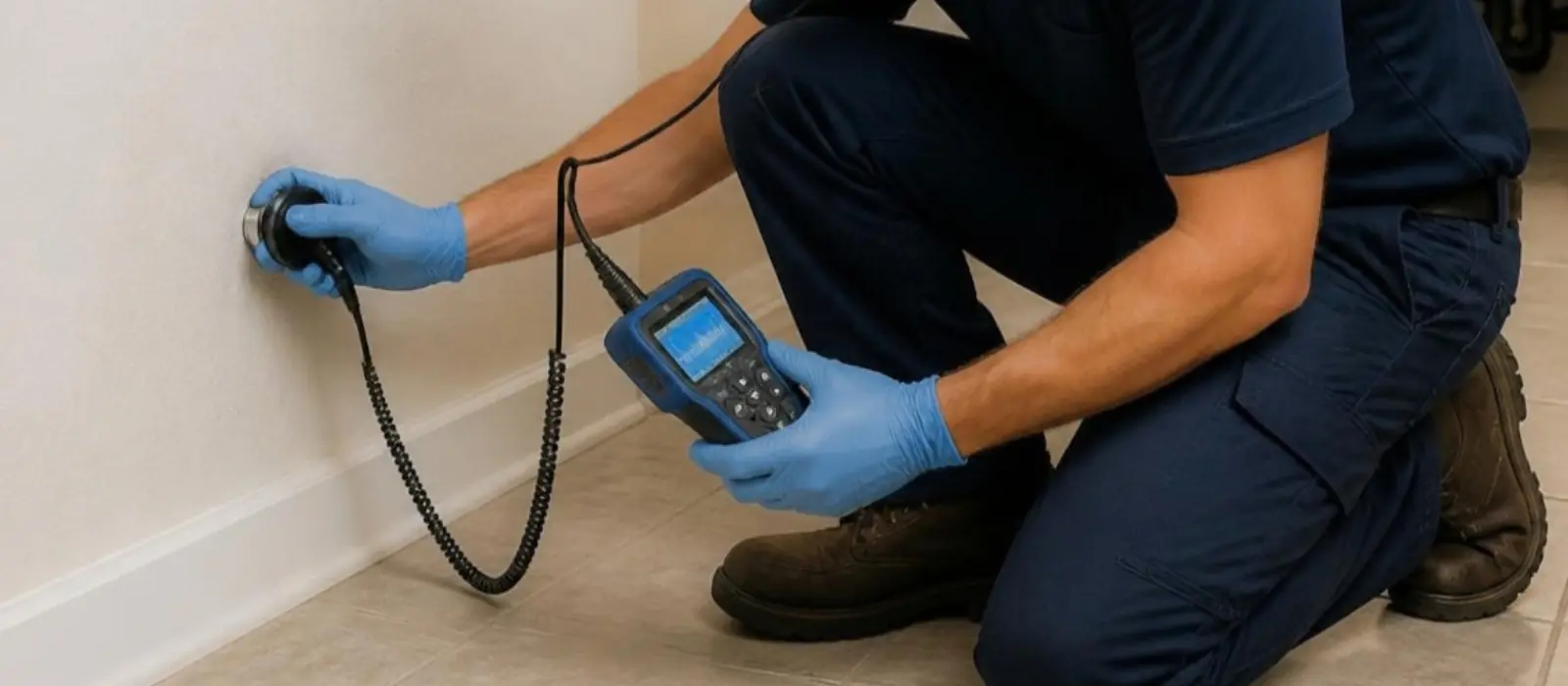
A ground microphone or a contact sensor picks up the hiss of pressurized water escaping a pipe. We sweep floors, walls and the yard, and the sound is loudest directly above the leak.
- 4
Thermal imaging
An infrared camera shows temperature differences behind drywall or across a floor. It is useful for hot-water lines, radiant heat and wet insulation, and we confirm what it shows with a moisture meter.
- 5
Targeted opening
Once the spot is known within a few inches, the plumber cuts one small access hole, repairs the pipe and tells you what the wall needs afterward.
Water where it should not be?
Call the 24/7 line and describe what you see and hear. The dispatcher books the next open plumber for your address.
What each symptom usually means
Your house may fit two rows, which is normal. The first visit uses the symptom to decide which test to run first.
| What you notice | Likely source | First test | Typical next step |
|---|---|---|---|
| High bill, no visible water | Toilet flapper, buried service line or slab line | Meter test | Pressure test, then listening along the line |
| Ceiling stain that keeps growing | Supply line, drain or roof above | Moisture meter and thermal camera | Open a small access hole at the source |
| Warm spot on a floor | Hot-water line in a slab or under a floor | Thermal imaging and listening | Locate, isolate and reroute or repair |
| Low pressure everywhere | Leak before the branches split, or a failing valve | Pressure test and meter test | Check the main valve, then the incoming line |
| Damp basement wall near the street side | Service line entering the house | Listening outside and at the meter | Excavation plan with a utility mark-out |
Toilets, outdoor spigots and other quiet leaks
Before anyone digs, we rule out the cheap and common causes. A toilet flapper that leaks into the bowl can run for weeks, and a few drops of food coloring in the tank will show it. An outdoor spigot that was left connected to a hose can split inside the wall once the temperature drops.
Irrigation lines, a leaking water heater connection and a failed washer hose are also on the checklist. If the leak turns out to be at the tank, water heater repair is the next call, and a dripping fixture can be handled through faucet repair in the same visit.
Cottages that sat closed over winter
Wareham has a large seasonal housing stock, and a cottage that was shut off in the fall can wake up with a split pipe the first time the water is turned on in spring. The break often hides inside a wall or under the floor, and the meter will show it as soon as someone opens the main.
If you are reopening a seasonal home, turn the main on slowly, watch the meter with every fixture closed, and walk the house for wet spots before you leave. Anything you find on that first check is easier to fix than a leak that runs unattended for a week.
Leaks under the yard and outside the foundation
A buried line leaks without any sign inside the house, other than a bill or soft ground. Acoustic gear works well on pressurized pipe, and a plumber can also run a pressure test from the meter to the house to confirm the section that is losing water. If the leak sits between the meter and the foundation, water line repair is the fix.
In Wareham the water comes from either the Wareham Fire District or the Onset Fire District, and your plumber may need to coordinate with the district about the meter or shutoff. A leak on the street side of the meter is usually the district's concern, while the house side belongs to you. Ask the district who owns which part before you pay for excavation.
Not sure it is a leak yet?
Describe the bill, the meter or the stain to the dispatcher. We tell you whether it needs a visit tonight or a morning slot.
What affects the price of leak detection
You get a clear price before work starts. The number turns on a few real factors, and a phone description helps us give you a range ahead of the visit.
Homeowners insurance often pays for sudden water damage but may not cover a slow leak that went on for months, and it may or may not cover the cost of finding the source. Ask your insurer before the visit, and keep your meter readings. Want a real number for your house? Call (508) 389-4045.
When we stop and say it is not a leak
Sometimes the answer is that nothing is leaking. A meter can look like it is moving because a softener is recharging, a toilet is refilling, or an ice maker cycled during the test. We repeat the meter test with those items accounted for and tell you plainly when the pipes are tight.
If the cause turns out to be a failed pipe, burst pipe repair covers the fix. Our dispatch also routes calls to Carver and Marion, so a plumber with detection gear may already be close by.
Frequently asked questions
Yes. The line is answered 24/7, including nights, weekends and holidays. Tell the dispatcher where the water is showing up and whether the main valve is closed, and the next open plumber is booked for your address. Same-day appointments are offered when a slot is available.
Close every faucet and make sure no appliance is running. Look at the low-flow indicator on the meter, which is a small dial or triangle. If it turns with everything off, water is escaping somewhere. Note the reading, wait an hour with nothing used, and read it again.
Often yes. Thermal imaging, a moisture meter and listening gear usually narrow a wall leak to a spot a few inches wide. We then cut one small access hole. Patching and painting the drywall afterward is not our trade, so you would call a drywall contractor.
Run the meter test first. If the meter moves with all fixtures off, the leak is between the meter and a fixture, and a pressure test narrows it. If it does not move, check toilets for a silent flapper leak and compare the bill to the dates of any irrigation or filling.
It depends on where the leak sits. In general the district handles the main and the part before the meter, and the owner handles the line from the meter to the house. Call your district, Wareham Fire District or Onset Fire District, to confirm where its responsibility ends.
Finding a leak does not need one. Leak repairs in a faucet, valve or working part of a fixture do not need one under 248 CMR 3.05. Replacing a section of pipe usually does, and the permit is pulled by a licensed plumber through the town's Inspectional Services.
Yes. We can pressure test the supply lines, check the meter with fixtures closed and look at the water heater and outdoor lines. Cottages near the water often have exposed piping in crawlspaces, so we check those runs first for freeze splits.