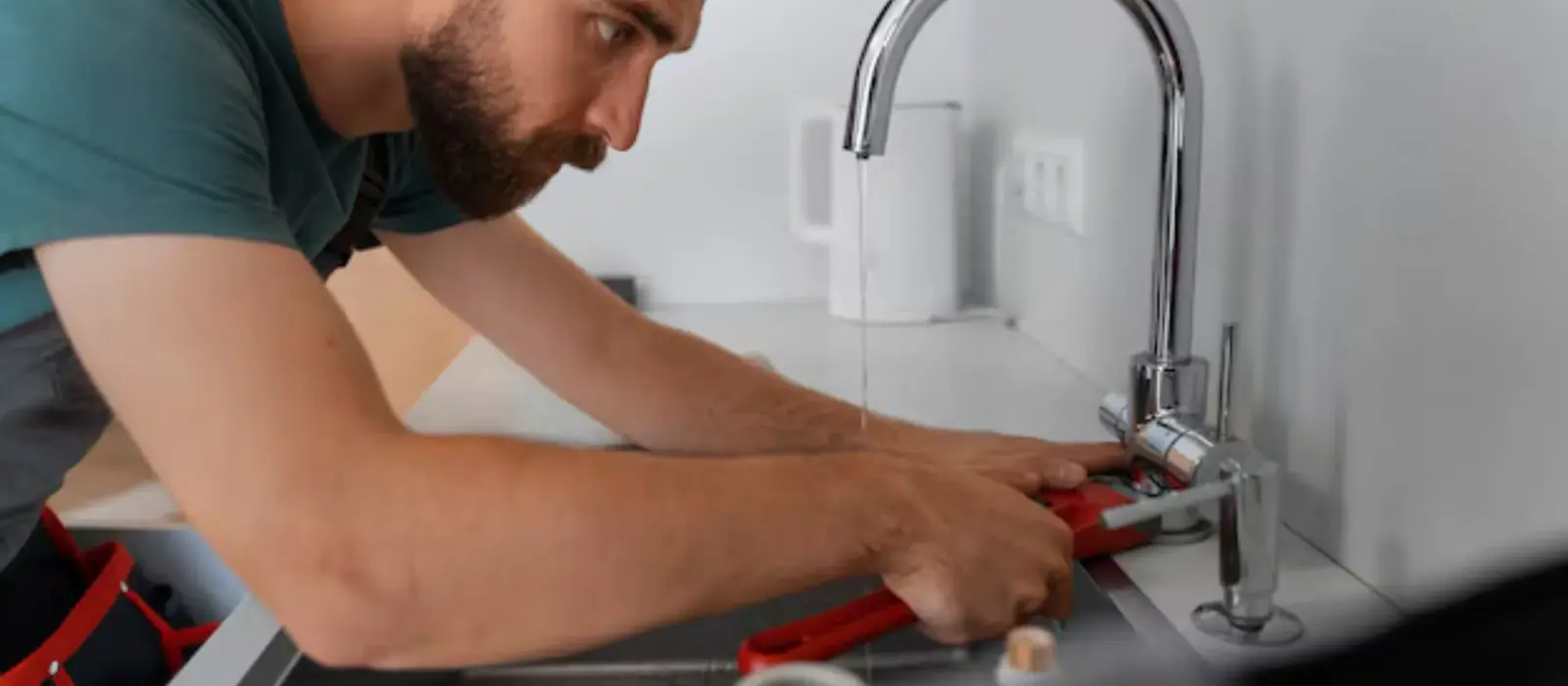
When a faucet or valve is an emergency
A slow drip can wait for the next business day. The cases below cannot, and the first line on the list is the one callers describe most.
- The valve under the sink or behind the toilet will not shut off, so you cannot isolate a leaking fixture. Shut the main and keep it closed until a plumber arrives.
- A faucet handle spins freely or the cartridge has blown out, and water sprays or runs steadily.
- A shower or tub valve will not stop, and the water heater is feeding it hot water that can scald.
- Water is dripping from the supply connection into a vanity, a cabinet or a ceiling below.
- An outdoor spigot is leaking inside the wall after a freeze. Close the interior shutoff to that line and keep the spigot open to drain it.
If the main valve itself will not turn, say so on the phone. That changes the plan, because the dispatcher may send a plumber who can shut water off at the curb stop or the meter.
Why the shutoff valve will not shut off
The small oval or round stop valve under a sink holds a rubber washer against a brass seat. After years without being turned, mineral scale and corrosion lock the stem, and forcing it can snap the packing or crack the valve body. That is why a homeowner who tries to close the valve to fix a drip sometimes ends up with a bigger leak than before.
Houses built before 1939 make up about a fifth of Wareham's housing stock, and many still have the original multi-turn stops, or no stops at all. A plumber can close the main, cut out the old stop and install a quarter-turn ball valve in its place, soldered or push-fit, so the next repair can be isolated in seconds.
While you wait for the plumber
These steps limit water damage and make the visit faster. None of them needs special tools.
- 1
Close the main shutoff
It sits near the meter or where the line enters the house. Turn it fully clockwise. If you cannot find it, check the basement wall facing the street.
- 2
Open the lowest faucet
Opening a basement or first-floor tap drains the pipes so less water reaches the leak. Then open one upstairs tap to let air in.
- 3
Protect the cabinet
Pull items out from under a leaking sink and set a bucket under the trap. Dry water off wood quickly, because particleboard swells within hours.
- 4
Turn the water heater to vacation
If hot water is leaking and you cannot shut it, lower the heater setting so the tank does not keep feeding the leak.
- 5
Note the brand and age
Look for the maker name on the faucet body. A photo sent before the visit lets the plumber bring the right cartridge.
Valve stuck open?
Close the main and call the 24/7 line. A dispatcher books the next open plumber for your address.
Faucet types and what usually fails
The repair depends on the faucet design, and identifying it takes a plumber about a minute with the handle off.
Compression faucet
Two handles with rubber washers. The washer wears and the seat pits, so it drips. The fix is a new washer and often a seat dressing.
Cartridge faucet
A single or double handle on a brass or plastic cartridge. When the seals wear, we replace the cartridge and the O-rings.
Ball faucet
One handle on a slotted ball with springs and seats. A kit replaces all the worn parts, and leaks around the base are usually O-rings.
Ceramic disc faucet
Two ceramic plates that slide against each other. They rarely wear, so a leak is usually debris or a seal. A cleaning or a new cartridge fixes it.
Shower and tub valve
The valve sits inside the wall, so a bad cartridge may need a trim kit removal, and a fully failed valve may require opening the wall.
Frost-free hose bib
The washer sits deep inside a long stem. If water leaks inside the wall after winter, the stem was often left connected to a hose.
Repair or replace the faucet
Not every leaking faucet is worth repairing. This is how we weigh it on site.
| Situation | Usually repair | Usually replace |
|---|---|---|
| Drip from the spout | Worn cartridge or washer on a good faucet | Pitted body or discontinued model with no parts |
| Leak at the base or handle | O-rings or a loose packing nut | Cracked body or corroded mounting |
| Low flow | Clogged aerator or screens | Mineral-choked internal passages |
| Stiff or sticky handle | Cleaning and fresh grease | Worn out finish and loose parts |
| Stop valve leaks or will not close | Packing nut tightened, if it is not seized | Seized stop, which should be replaced with a quarter-turn valve |
Wareham water and cottages that sat all winter
Wareham gets its water from two districts. The Wareham Fire District pumps from seven gravel-packed wells in the Plymouth-Carver aquifer and adds lime to adjust pH, while the Onset Fire District draws from four wells and adjusts pH with sodium hydroxide. Both treat water to reduce corrosion of household plumbing, but old brass stops and galvanized lines still seize and weep with age.
Seasonal homes add a pattern of their own. A cottage shut down in fall and reopened in spring often has a stop valve that drips after it is turned for the first time in months, a hose bib that cracked inside the wall or a shower cartridge that dried out. We would rather replace one seized valve on the first visit than watch it fail on a summer weekend.
Water still running after hours?
Tell the dispatcher which valve will not close and ask for the next same-day slot.
What affects the price of faucet repair
You get a clear price before work starts. These are the factors that move it.
A new faucet or new shutoff valve falls under plumbing installation when the fixture is being replaced instead of repaired.
When a faucet leak is really a larger leak
Sometimes the drip at the faucet is a symptom. A meter that keeps turning with every fixture closed, a wet cabinet behind a different sink or a bill that keeps climbing points to a hidden supply leak. In those cases leak detection with acoustic and pressure testing finds the line before anyone opens a wall, and a split pipe is a job for burst pipe repair. Calls from Bourne and the other towns around Wareham get the same dispatch.
What to do while a faucet will not shut off
A few steps reduce damage and risk, and they apply whether or not a plumber is on the way.
- Close the stop valve under the fixture by turning it clockwise, or close the main if the stop is stuck.
- Do not force a corroded stop with a wrench, because a snapped stem makes the leak worse.
- Keep towels and a bucket under the line and move anything electrical away from the spray.
- Take a photo of the faucet's brand mark so the right cartridge can be on the truck.
Frequently asked questions
Yes. The 24/7 line is answered on nights, weekends and holidays, and a licensed plumber is booked for the next open slot. If the shutoff valve will not close, turn off the main valve until the plumber arrives.
Do not force it. A seized stem can snap and make the leak worse. Close the main instead, and we replace the old valve with a quarter-turn stop so it works next time.
Repair is the answer when the body is sound and parts exist. Replacement makes sense when the body is pitted, the finish is gone or the model is discontinued. We give you the choice with a price for each.
Close the interior shutoff to that line and leave the spigot open to drain. A frost-free hose bib that cracked during a freeze needs a new stem or a new bib. Always disconnect the hose in fall.
Yes. We replace cartridges, stems and trim. A fully failed valve body behind a wall is a bigger repair, and we describe the access it needs before work begins.
The brass seat is probably pitted, so the new washer cannot seal. The seat is dressed or replaced, or the faucet is swapped. A water-saving aerator can also whistle, which is not a leak.
No. 248 CMR 3.05(1)(c) says repairs to a faucet, a valve or the working parts of a fixture need no permit. Replacing the fixture or changing the plumbing behind it can, and that goes through Wareham Inspectional Services.