What counts as plumbing installation
The term covers a wide span of work, so it helps to separate three levels. A fixture swap replaces one faucet, toilet or sink in the same spot using the existing supply and drain. A hookup connects an appliance, such as a dishwasher, ice maker or washer, to lines that are already in the wall.
A new run is a different job. It adds supply lines, a drain, a vent and sometimes a shutoff to a place that had none, as in a basement bath, a second kitchen sink or a laundry room moved upstairs. Each level has its own tools, time and permit question.
Common installation jobs
These are the jobs people call about most, with what each one involves.
New toilet or vanity
Remove the old fixture, check the flange and stops, set the new one on a fresh ring and test for leaks. A new closet flange or supply stop is often part of the job.
Dishwasher hookup
A hot-water supply with a small valve, a drain hose looped high under the counter or tied to an air gap, and a 120-volt circuit supplied by an electrician.
Washing machine box
Two supply valves and a standpipe with a trap. The drain should accept the machine's pumped flow without backing up.
Sink relocation
Moving a sink means moving its supply, drain and vent. The farther it moves, the more floor and wall are opened.
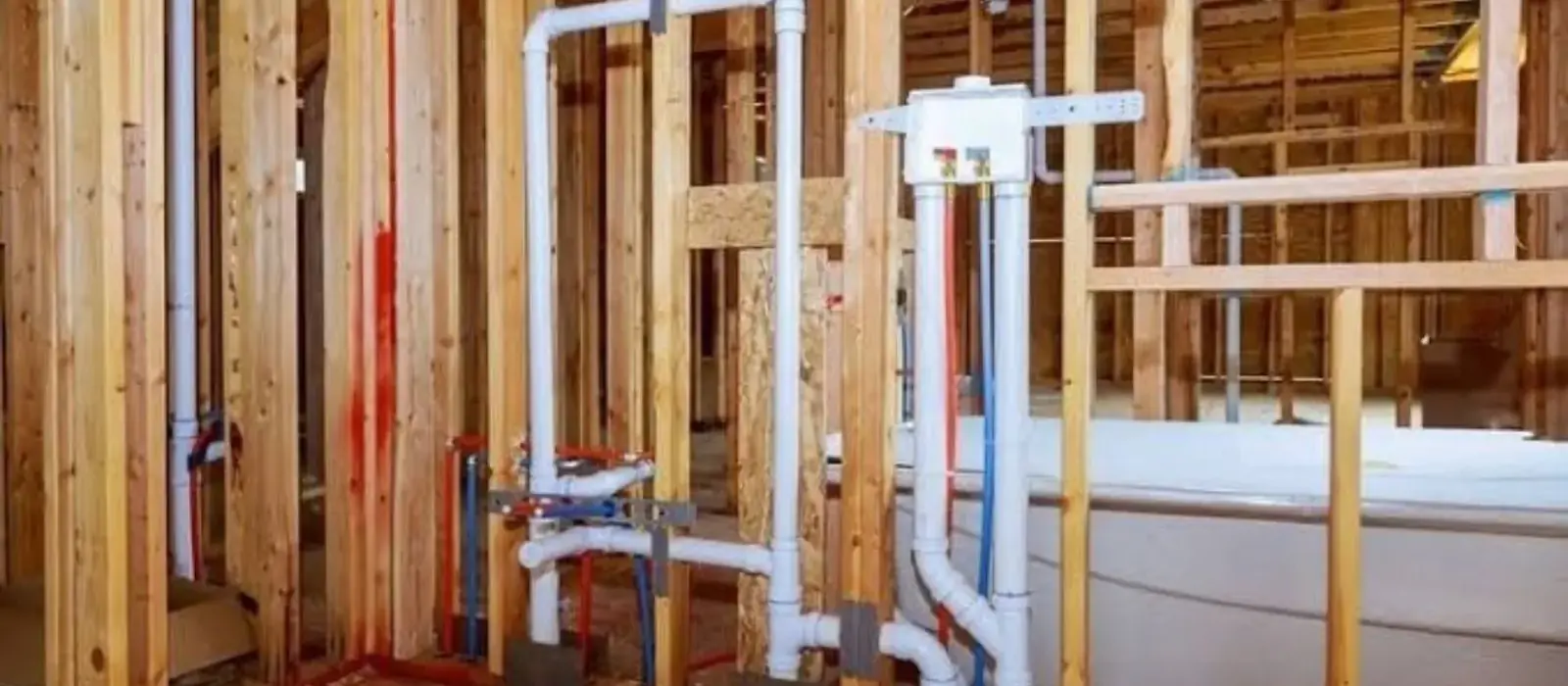
Bathroom rough-in
The drain, vent and supply are set inside open walls and floor before tile and drywall. Fixture positions are measured from framing.
Kitchen rough-in
Sink, dishwasher, disposal and ice maker are positioned before cabinets. Gas lines for ranges are handled by a licensed gas fitter under separate rules.
How an installation job runs
Most jobs follow the same order, from the first phone call to the final test.
- 1
Describe the job
Tell us what is being installed, the age of the house and whether the walls are open. Photos of the existing fixtures and shutoffs help.
- 2
Site visit and scope
The plumber checks the existing supply and drain, the venting and access. For a basic swap this is the same visit as the work.
- 3
Price and permit
You get a clear price before work starts. If a permit is needed, the licensed plumber applies for it before the pipes are touched.
- 4
Install and rough-in
Fixtures are set, lines connected and, for new runs, pipes are pressure tested while the walls are open.
- 5
Inspection and finish
For permitted work, the plumbing inspector checks the rough-in or the finished job. Tile and drywall wait until it passes.
Planning a fixture swap or remodel?
Call and describe the job. We book a visit and give a clear price before work starts.
Permits and licensed plumbers in Wareham
Under 248 CMR 3.05, a permit must be issued before plumbing or gas work is installed, altered, removed, replaced or repaired. Permits go only to properly licensed individuals, not apprentices, and an application is made in writing before work begins. Wareham's Inspectional Services office at Memorial Town Hall on Marion Road handles building, electrical, plumbing and gas permits.
Exceptions exist. Repairing a leak in a faucet, a valve or the working part of a fixture, and clearing a stoppage, need no permit under 3.05(1)(c). New installations, relocated lines and water heater replacements do. A homeowner who hires an unlicensed worker can end up with work that fails inspection, so you can check any plumber's license through the state's license lookup on mass.gov.
Which jobs need a permit
This table gives the general pattern. Wareham Inspectional Services makes the final call on any specific job.
| Job | Permit pulled by a licensed plumber | Notes |
|---|---|---|
| Repair a leaking faucet washer or cartridge | No | Working part of a fixture |
| Clear a stoppage in a drain | No | Covered by the 3.05(1)(c) exception |
| Replace a toilet or sink in the same place | Ask the town | Rules can differ, so confirm before ordering |
| Add a new fixture or sink | Yes | Includes drain and vent connections |
| Move a sink, tub or toilet | Yes | Relocated lines are new work |
| Bathroom or kitchen rough-in | Yes | Inspection happens before walls close |
| Replace a water heater | Yes | Handled with the plumbing and gas permits |
Wareham homes: what to expect behind the walls
The median Wareham home was built in 1969, and about a fifth of the housing predates 1939. Houses of that age often have galvanized steel supply lines that have narrowed inside, cast iron drains and vents that were sized for fewer fixtures. A new bathroom or sink can reveal that the old line cannot feed it well.
In those cases a short section of pipe is replaced, or the plan expands into repiping a branch or the whole house. We tell you when that is the honest route and when a simple tie-in will do.
Got a remodel on the calendar?
Tell the dispatcher what is being added and ask for a site visit before the walls close.
Cottages, additions and conversions
Wareham has a large seasonal housing stock, and many summer cottages are now used year-round. A conversion adds bathrooms, laundry and heat, which is where installation work piles up. Supply lines, hot water capacity and drain slope all have to be checked, because a cottage plumbed for weekends does not always handle a full-time household.
A new water heater for the extra load follows water heater installation rules, including the permit. Sewer-connected homes tie into the town's gravity sewer. Homes on septic need the tank, the distribution box and the leach field checked for the added flow, and Title 5 rules apply if the property is sold.
What affects the price of installation
You get a clear price before work starts. These are the factors that decide it.
Coverage beyond Wareham
The same licensed plumbers install for customers in Bourne and the other neighboring towns, and each town's inspection office sets its own permit routine.
Before you buy fixtures
A few checks before the order goes in save a second trip.
- Measure the rough-in distance from the wall to the center of the toilet drain. Most are 12 inches, but older houses vary.
- Confirm the sink cutout size and the number of faucet holes in the countertop.
- Keep the manufacturer's installation sheet, because the plumber needs the supply and drain connections.
- Check that the shutoff valves under the old fixture work. If they do not, plan to replace them.
- Ask whether a toilet repair would solve the problem instead of a new bowl.
If something is leaking in the meantime, close the shutoff and call. A leak is fixed first.
Frequently asked questions
Yes. Under 248 CMR 3.05 permits are issued only to properly licensed individuals, and a new fixture falls under the permit rule. A licensed plumber applies, installs and arranges the inspection.
Yes. We connect the supply, the drain and the air gap or high loop, and test for leaks. The electrical connection for a dishwasher is done by a licensed electrician.
The cost depends on how far it moves, what is in the wall and the floor below. We give a clear price after seeing the space, and we explain the permit and inspection fees separately.
It is the first stage of plumbing for a new bathroom or kitchen, when drains, vents and supply lines are set inside open walls. The inspector looks at it before the walls are closed.
Permit rules vary by job, so we ask Wareham Inspectional Services on your behalf. Replacing in the same location may be treated differently from adding or moving one.
Yes, though we check the supply line condition first. If the old pipe is badly narrowed, we explain the options, which may include replacing a section or the branch.
A simple toilet or faucet swap is usually done in one visit. Rough-in and relocation jobs take longer, and we give a schedule after seeing the space.