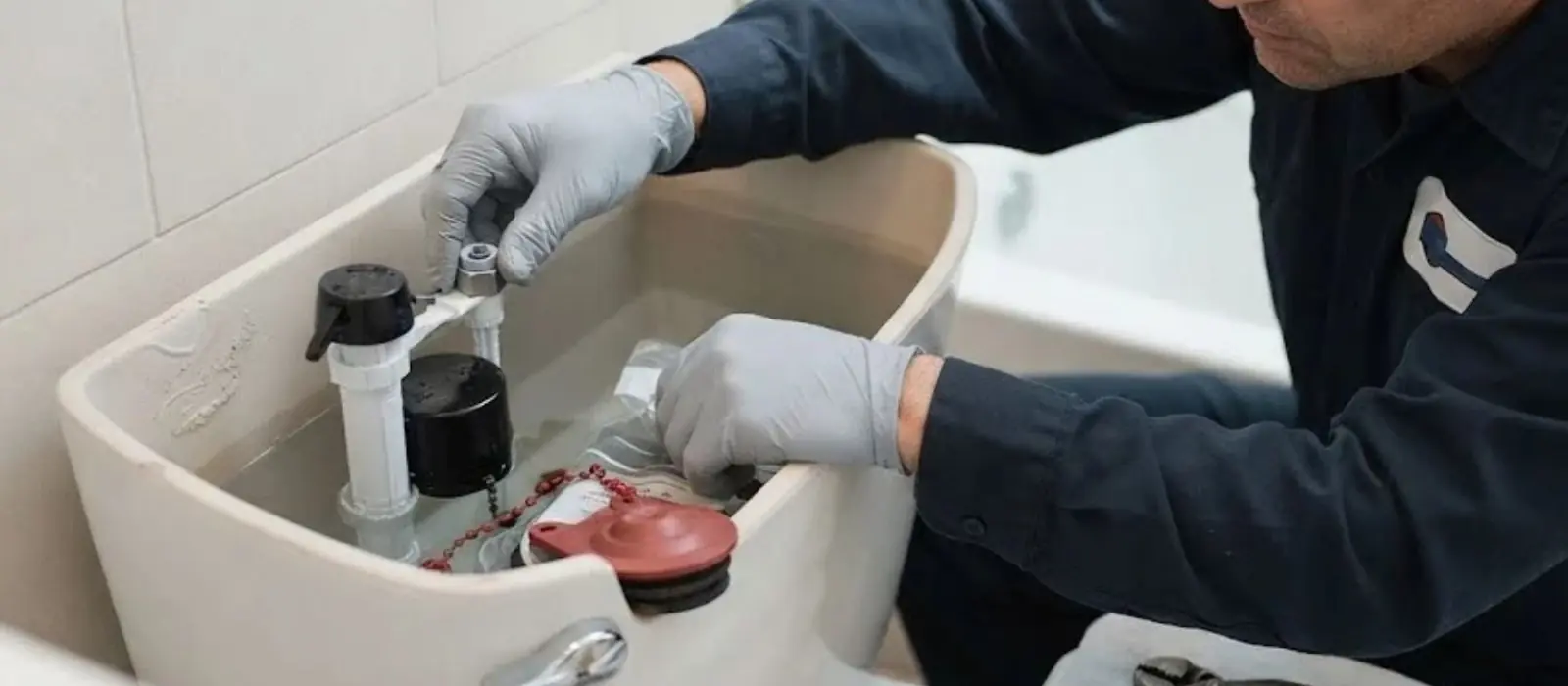
When a toilet problem is an emergency
A toilet that merely runs can wait for a daytime slot. These situations should not wait, because water on a bathroom floor reaches the ceiling below faster than most people expect.
- Water is spilling over the rim and the supply stop will not close. Shut the main water valve at the meter or where the line enters the house.
- Water seeps from under the bowl every time you flush. That usually means a failed wax ring or a loose closet bolt, and the subfloor is getting wet.
- Dark water or sewage rises in the bowl, the tub or a basement drain at the same time. The blockage is in the main drain, so stop all water use.
- The bathroom is above a finished ceiling, a kitchen or a panel. Move rugs, towels and anything electrical out of the way and call at once.
- The only toilet in the house is out of service. A same-day visit matters most when there is no second bathroom.
If you are not sure which of these fits, describe the sound and the water level on the phone and the dispatcher will tell you whether to shut the main.
What to do in the first five minutes
The steps below take no tools beyond your hands and a towel. Do them in order and you can limit the damage while the plumber is on the way.
- 1
Close the toilet's supply stop
It is the small oval or round valve on the wall or floor behind the bowl. Turn it clockwise until it stops. Old multi-turn stops can be stiff, so use both hands.
- 2
Stop the tank from refilling
Lift the tank lid and hold the float arm or float cup up, or press the flapper into its seat. This keeps a stuck fill valve from feeding the overflow.
- 3
Bail, do not flush
Scoop water from a full bowl into a bucket and pour it into a tub. Flushing again only adds to the spill if the drain is partly blocked.
- 4
Shut the main if the stop fails
Seized stops are common in houses that have not been touched in decades. The main shutoff ends the flow completely.
- 5
Call and describe what you see
Tell the dispatcher where the water is, whether it is clear or dirty and whether other drains are slow. That decides which tools go on the truck.
Leaks at the base and the wax ring
A toilet sits on a flange, the ring fitting at the top of the floor drain. A wax or foam ring seals the joint between the bowl horn and the flange, and when it fails, water escapes only while you flush. Because the leak is hidden, the first sign is often a soft floor, a stain on the ceiling below or a smell.
The repair is to shut off the supply, drain the tank and bowl, lift the toilet, scrape off the old ring, check the flange and set the bowl on a new ring with fresh closet bolts. A cracked or corroded flange is a bigger job, and we explain it before starting. Sometimes the leak at the base is really a weeping supply line or a sweating tank, so the plumber dries everything and tests each joint.
Water on the bathroom floor?
Shut the toilet's supply stop, then call the 24/7 line. We book the next open plumber for your address.
Running, ghost flushing and weak flush
Most nonstop toilets come down to a few cheap parts inside the tank. A plumber can usually diagnose which one by listening and looking for a minute.
Worn flapper
The rubber seal lets tank water trickle into the bowl. A few drops of food coloring in the tank show it, because color appears in the bowl without flushing.
Fill valve that will not shut off
Water keeps rising to the overflow tube and hisses. The fill valve gets replaced, and the float is set so the level stops below the tube.
Chain too tight or too loose
A tight chain holds the flapper open. A slack chain gives a short flush that leaves waste behind.
Clogged rim jets
Mineral buildup narrows the small holes under the rim and the bowl flushes weakly. Scraping them clear restores the swirl.
Partial blockage downstream
The bowl rises, then drains slowly after a flush. A closet auger reaches what a plunger cannot, and a repeat problem points to the drain line.
If the bowl is cracked, a replacement is the honest answer. A hairline crack below the water line leaks slowly and does not repair well.
Symptoms and the usual fix
Use this as a rough map. The plumber confirms the cause on site before quoting.
| What you see | Likely cause | Usual repair | Can it wait? |
|---|---|---|---|
| Water around the base after flushing | Failed wax ring or loose bolts | Reset on a new ring | Not for long, the subfloor stays wet |
| Tank refills every few minutes | Leaking flapper | New flapper and chain adjustment | A few days, with the stop closed at night |
| Rocks when you sit | Loose bolts or an uneven floor | Re-seat, shim and tighten | Yes, unless it leaks |
| Bowl fills, does not drain | Clog in the trap or branch | Closet auger or main-line cable | No, do not flush |
| Water drips from the supply line | Worn braided line or stop | Replace the line or the stop | Close the stop until repaired |
Sewer or septic changes the clog advice
Wareham's sewer department reports about 61 miles of gravity sewer and 45 pump stations, and the town's housing plan says the area north of Route 25 could not be added to the sewer system. So some of our toilet calls end at a town main and some end at a septic tank, and the first question we ask is which one you have.
On a septic system, a toilet that backs up along with other fixtures can point to a full tank, a blocked outlet or a saturated leach field, so a plunger is not the answer. Never pump the tank until the blockage has been found.
Toilet out of service tonight?
Describe the leak or the backup to the dispatcher and ask for the next same-day slot.
Older houses and seasonal cottages
About a fifth of Wareham's housing was built before 1939, and plenty of cottages around Onset were built for summer only. Those homes often have a closet flange set in lead or cast iron, a toilet supply stop that has not moved in years and a drain that was never sized for a full-time household.
A cottage opened in spring may have a dry wax ring, a flapper stuck to its seat or a stop valve that weeps once turned. We carry replacement stops and supply lines for that reason. If the toilet is old enough that parts are hard to find, we say so and talk through a new one.
What affects the price of toilet repair
The price is explained before work starts. A phone description gives a rough idea, and the plumber confirms it once the lid is off.
Replacing a toilet is covered under plumbing installation, and a permit question can come up, so ask us about it on the call.
Related work and nearby towns
When a toilet keeps backing up, the cause is usually in the drain, and drain cleaning or sewer line repair follows the camera findings. The same dispatch covers Bourne and Buzzards Bay, and it reaches the rest of the Wareham villages around the clock.
Frequently asked questions
Yes. The line is answered 24/7, including holidays, and a licensed plumber is booked for the next open slot at your address. Close the toilet's supply stop first, and if water is still flowing, shut the main.
Yes, because the water goes under the floor where you cannot see it. A weeping base can soak the subfloor and the ceiling below in a few weeks. Keep the supply stop closed until the repair is done.
Often yes. We lift it, check the flange height, add shims or a spacer and reset it on a new ring. If the flange is cracked or the floor is soft, we explain the repair first.
Usually, if you close the supply stop for the night. A leaking flapper wastes water but does no damage. Call right away if the tank overflows or the floor is wet.
That is a main-drain blockage, not a toilet problem. Stop using water and call. We run a cable or a camera to find it, and drain cleaning is the usual fix.
Yes. We give a clear price after looking at the toilet and before any parts or labor are charged. If we find a second problem, we stop and explain it.
Under 248 CMR 3.05(1)(c), repairs to the working parts of a fixture do not need a permit. Replacing or relocating a toilet is different, and the Wareham Inspectional Services office handles those permits through a licensed plumber.