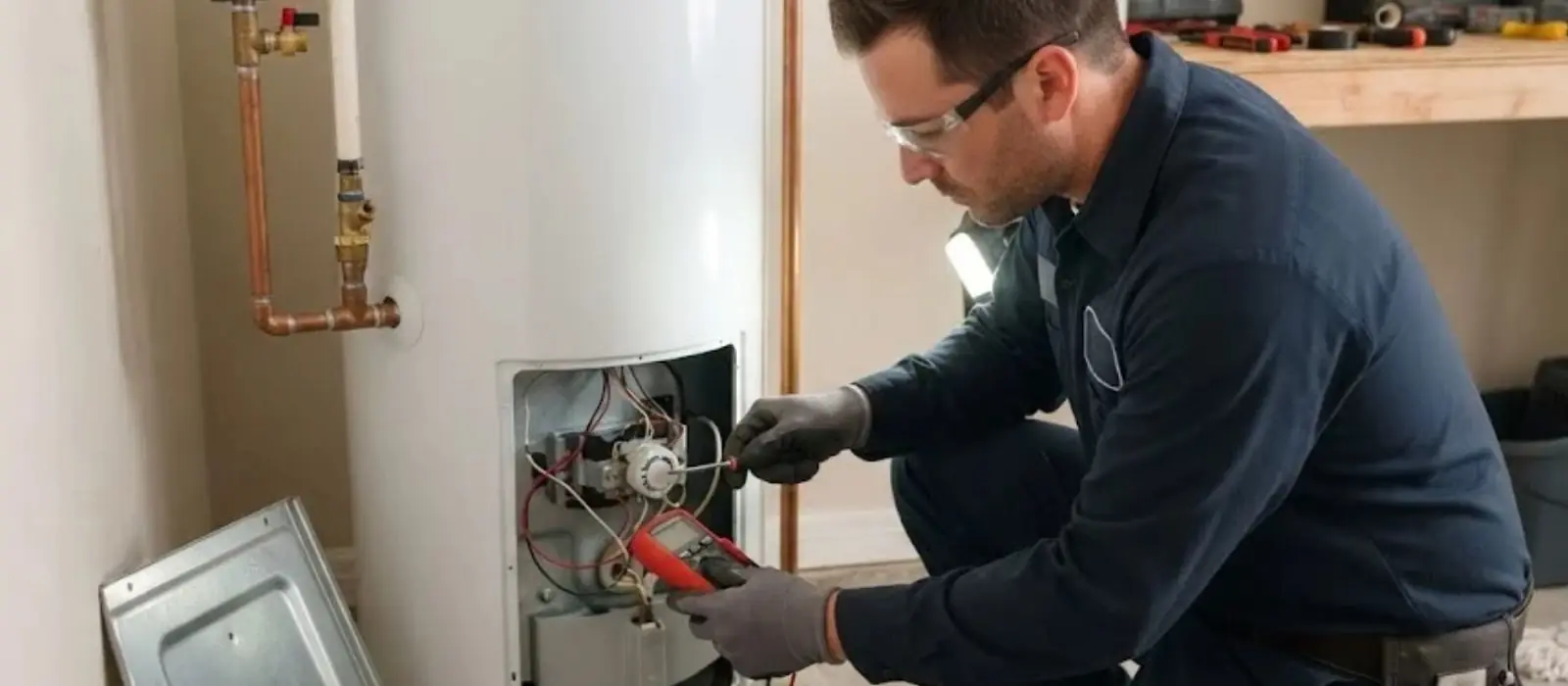
Symptoms and the part behind them
What the heater does tells a plumber which part to test first. Describe these on the call and the right parts can come on the truck.
Water is lukewarm or runs out fast
On an electric tank this is often a burned lower element or a failed thermostat. On a gas tank, sediment or a weak burner is more likely.
No hot water at all, electric
A tripped high-limit reset button, a dead upper element or a bad thermostat. A breaker that trips again right away points to a shorted element.
Pilot goes out, gas
A worn thermocouple or thermopile, a dirty pilot tube or a draft problem. A gas control valve that no longer holds the flame is a larger repair.
Rotten egg smell in hot water
Bacteria reacting with the anode rod. A new anode and a tank flush often clear it.
Popping or rumbling
Sediment baked onto the bottom of the tank. A flush may work, but heavy buildup is a sign of age.
Cold water from the hot tap sometimes
A broken dip tube lets incoming cold water mix at the top of the tank.
When a water heater problem is an emergency
Some heater faults can wait for a daytime visit. These cannot, so call the 24/7 line first and then work down the list while you wait.
- Water is running from the relief valve or its discharge pipe and does not stop. That means pressure or temperature is climbing past safe limits.
- The tank or its fittings are leaking onto the floor, near the panel or onto finished space below. Shut the cold supply valve above the tank at once.
- A gas unit smells of gas, or the burner flame looks yellow and lazy with soot around the door. Leave the house, call the gas utility or 911, then call us from outside.
- A breaker keeps tripping or a wire is scorched or buzzing. Leave the breaker off.
- A power outage ended and the heater will not come back on. Hurricane Bob in 1991 left more than 60 percent of southeast Massachusetts and southeast Rhode Island residents without power, and any long outage can leave pilots out and thermostats needing a reset or a repair.
Nights, weekends and holidays are covered. Tell the dispatcher it is an after-hours water heater problem and we book the next open licensed plumber.
Common repairs and what they involve
This is how the usual repairs break down. Your unit may need more than one, which is why the first step is a short diagnosis.
| Part | What it does | When it fails | What the repair involves |
|---|---|---|---|
| Heating element (electric) | Heats water in the tank | Lukewarm water, no hot water, tripped breaker | Power off, partial drain, element swapped and sealed with a new gasket |
| Thermostat | Switches the element or gas control | Water too hot, too cold or inconsistent | Test with a meter and replace the thermostat and high-limit |
| Thermocouple or thermopile | Tells the gas valve that the pilot is lit | Pilot will not stay on | Replace the sensing part and relight, then check draft |
| Temperature and pressure relief valve | Opens to release dangerous heat or pressure | Drips, weeps or discharges steadily | Replace the valve and check the discharge pipe, thermal expansion and house pressure |
| Anode rod | Sacrificial metal that protects the tank lining | Smelly water, a heavy rust color, a worn rod | Unscrew, inspect and replace the rod, then flush |
| Dip tube | Sends cold water to the bottom of the tank | Hot water runs out quickly | Replace the tube, usually at the cold inlet fitting |
| Drain valve | Lets you flush the tank | Leak at the spout, stuck valve | Replace with a brass valve once the tank is empty |
No hot water or a leaking valve?
Call the 24/7 line and describe what you see. A dispatcher books a licensed plumber, and the price is explained before work starts.
Heater tripping the breaker?
Leave the breaker off and call. After-hours calls go to the same dispatcher, who books the next open licensed plumber.
Electric tanks: what we test first
Electric heaters have two elements, one near the top and one near the bottom, and each is controlled by its own thermostat. The upper element heats first and then hands off to the lower. If the water is lukewarm, the lower element or thermostat is usually the culprit, and if there is no hot water at all, the upper side is.
A plumber tests continuity with a meter, checks for ground faults and presses the high-limit reset before replacing anything. Replacing an element without testing guesses at the cause, and elements often fail because of sediment, so the tank gets a flush at the same time.
Gas tanks: pilot, burner and flue
A gas heater needs three things to work, a lit pilot, a clean burner and a flue that carries exhaust out. The thermocouple or thermopile keeps the gas valve open only while the pilot burns, so a worn one shuts the gas off again a few seconds after you release the knob.
Gas work is the line where we ask people not to experiment. A sooty or yellow flame, a backdrafting flue or a gas smell is a hazard to everyone in the house, and under the Massachusetts Fuel Gas and Plumbing Code (248 CMR 10.00) gas fitting is for licensed pros. If you cannot light a pilot on the first careful try, call us.
Safe checks you can make before the plumber arrives
These checks are safe and can save a visit. Stop at the first sign of gas, scorching or water near wiring.
- 1
Look for water
Check the floor and the drain pan. A wet pan with a dry tank above usually means a fitting or valve, not the shell.
- 2
Check the breaker
On electric units, look at the breaker and reset it once. If it trips again, leave it off.
- 3
Press the reset
Many electric tanks have a red high-limit button behind the upper panel. Power must be off before the cover is opened.
- 4
Read the temperature dial
A dial that slipped to vacation or low can mimic a failure.
- 5
Note the model plate
The age and size on the rating label help the plumber bring the right parts.
Repair or replace? A fair test
If the tank is sound and the failed part is cheap, repair is almost always right. If the tank itself is leaking, or it is old and has needed more than one repair, a full water heater replacement is the better use of money.
A useful rule is that a repair should be worth doing only if the tank has plenty of life left. We tell you plainly when we think the answer is a new tank, and we do not charge for a repair that will not hold.
What affects the price of a repair
We quote the price before the work begins, and these are the factors behind it.
If a leak is coming from somewhere other than the heater, such as the supply pipes, leak detection finds it without opening walls blindly.
Salt air, cottages and seasonal use
Wareham has a large seasonal housing stock around Onset and the shore, and a heater in a closed cottage can sit for months without power or water. After a long shutdown, a cold start can reveal stuck relief valves, dry elements that burn out when powered on an empty tank, and anodes that were already thin. Always fill the tank completely before switching an electric heater on.
Coastal air also corrodes flues, the tank jacket, wire connectors and the drain valve faster than inland conditions do. If you manage a rental or cottage near the water, a yearly look at the anode and the vent is an inexpensive way to head off an after-hours call.
Source type: Wareham Housing Production Plan
Nearby towns and related work
The same crews drive to Marion and the surrounding towns, and routing follows whoever is closest and open that day. If the unit that failed is a wall-hung gas model, our page on tankless water heater service covers flushing and descaling.
What to do when the water heater acts up
A few steps reduce damage and risk, and they apply whether or not a plumber is on the way.
- For a leak, shut off the cold supply and the power or gas control, then keep people away from the pooling water.
- Never touch the wiring of an electric unit with wet hands, and turn off its breaker before any inspection.
- If you smell gas or see soot around a gas unit, leave the house and call the gas utility or 911 before the plumber.
- Do not cap or plug the relief valve discharge pipe, even if it drips.
Frequently asked questions
Yes. The line is answered 24/7, including nights, weekends and holidays. Tell the dispatcher whether the tank is gas or electric and what you see, and the next open licensed plumber is booked. Same-day appointments are offered when a slot is available.
On an electric tank, the usual causes are a tripped breaker, the high-limit reset, a burned element or a bad thermostat. On a gas tank, it is typically a pilot that went out, a worn thermocouple or a failed gas valve.
If the shell is sound and the failure is a part, yes. If the tank leaks from the body or has needed several repairs, replacement usually makes more sense, and we say which one fits.
It may be doing its job because the pressure or temperature is too high, or it may be worn. The fix can be a new valve, an expansion tank or a thermostat correction, so have it checked and do not cap the discharge pipe.
The work is simple on paper, but it involves power, a partial drain and a watertight seal. A mistake means a shock or a leak, so we suggest having a licensed plumber do it.
Bacteria in the tank react with the magnesium anode rod and produce hydrogen sulfide gas. A new anode type and a flush usually fix it. If the smell is gas, leave and call the gas utility.
Replacing the whole tank does, and it must be pulled by a licensed plumber under 248 CMR 3.05. For anything else, your plumber will tell you what applies, and Wareham Inspectional Services handles the rules.
It carries out sediment from the bottom of the tank, which improves efficiency and cuts popping. It does not fix a leaking shell, so we check the tank first.