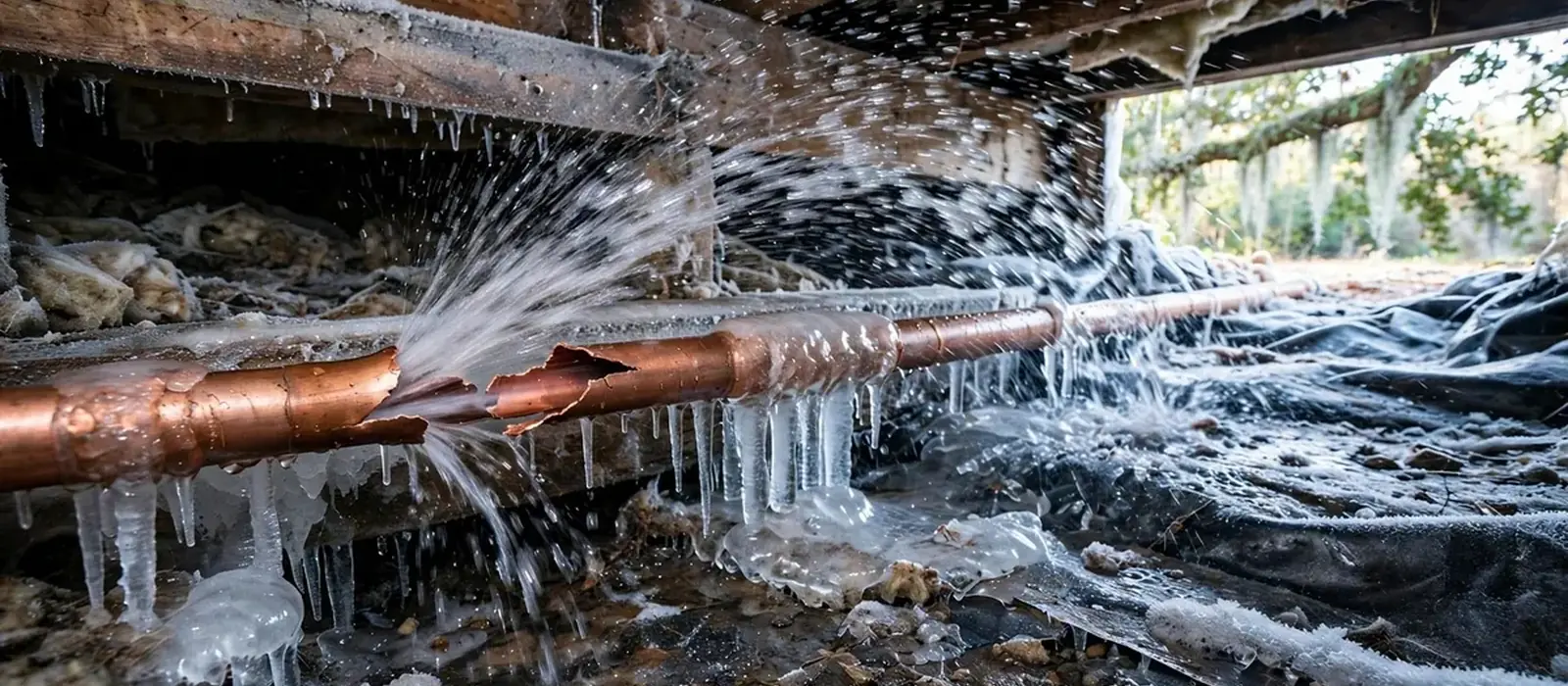
Drain-down or antifreeze: which method fits
Both methods aim for the same result, which is no standing water in any pipe, trap or fixture. The choice depends on how the house is piped and who will be there in spring.
Drain-down (dry)
- Main shut, all taps open, low-point drains opened, and compressed air blown through the lines to push out the last water.
- Works well in a house with a simple layout and drain valves at the lowest points.
- No antifreeze goes into the water lines, so the first spring flush is cleaner.
- Pockets in the pipe can still hold water, so air-blowing helps.
Antifreeze fill (wet)
- Water lines are drained, then non-toxic antifreeze is pumped into the lines through a bypass or a pump, one fixture at a time.
- Useful for a house with many low spots, long runs or a tub that cannot be fully emptied.
- Traps and toilet bowls get antifreeze poured in to stay protected.
- The lines need a full flush in spring to clear the antifreeze.
Winterizing a house on town water, step by step
Do this on a day when the house is still above freezing and the heating system is still on. Rushing the job is how pockets of water get left behind.
- 1
Shut off the main
Close the main shutoff where the water enters the house. If the shutoff is at the curb, confirm who is allowed to operate it, since the water district owns that valve.
- 2
Drain the lines
Open the lowest faucet or drain valve first, then every other faucet, hot and cold, upstairs and down, plus outdoor spigots and the washing machine hoses.
- 3
Empty the water heater
Turn off gas or power first, shut the cold supply, attach a hose to the drain valve and open a hot tap to let air in so the tank drains.
- 4
Blow out or fill with antifreeze
Use compressed air at a low-pressure setting through a fitting at the main, or run antifreeze through the lines per the product label.
- 5
Protect traps and drains
Pour a cup or two of non-toxic antifreeze into each sink, tub and floor drain trap, and into toilet bowls after the tank is drained and the bowl is pumped out.
- 6
Check the rest
Dishwasher, ice maker, humidifier and any irrigation line need draining too, and each one has its own drain point.
Closing the house for the season?
Call (508) 389-4045 and ask for a licensed plumber to drain down or blow out the lines. Same-day appointments are offered when a slot is open.
The parts people forget
Most winter damage in an empty cottage starts at something small. Walk this list before you leave.
- Outside spigots: close the interior shutoff for each hose bib, open the outdoor tap and leave it open. Remove hoses, since a connected hose traps water in the spigot.
- Toilet tanks and bowls: flush to empty the tank, sponge out what remains, and add antifreeze to the bowl.
- Washing machine: disconnect the supply hoses and drain them, and run the machine briefly to clear its pump.
- Water softener or filter: bypass and drain the housing, because filter cartridges can crack.
- Outdoor shower or hose line: drain and cap both.
- Heating: if you keep the heat on low, set the thermostat to maintain a safe temperature and know that a power loss will end that protection.
Private well homes: pump and pressure tank
A seasonal home on its own well needs two more steps. Turn off the breaker for the well pump, then drain the pressure tank by opening a tap until the tank empties and the air pressure drops. On a submersible pump the line from the well to the house also needs to be drained or buried below the frost line.
A pressure tank holds a bladder and air charge, so after draining it, leave a valve or tap open so nothing remains under pressure. In spring, reverse the process in order, and recheck the air pre-charge in the tank before the pump restarts.
What the housing plan says about seasonal stock
Wareham's Housing Production Plan refers to a large seasonal housing stock and dense summer communities, and it notes the town's two water districts: the Onset Fire District and the Wareham Fire District. Roughly 20 percent of the town's housing predates 1939, and older houses of that era often have fewer shutoff valves and long, hard-to-drain pipe runs.
If your cottage is on district water, ask your district about how it handles seasonal shutoffs at the curb stop, since procedures vary. Fewer valves in the house mean a drain-down takes longer and an antifreeze method may be the cleaner choice.
Source type: Wareham Housing Production Plan, with Onset Fire District and Wareham Fire District water departments
Winterizing tasks by where the water sits
A quick map of where water hides makes it easier to be sure nothing was missed.
| Location | What holds water | Winterizing action |
|---|---|---|
| Kitchen and bath sinks | P-traps, supply stubs | Antifreeze in traps, open taps, drain supply |
| Water heater | Tank, relief valve line | Shut off fuel, drain tank, leave drain open |
| Toilets | Tank and bowl | Flush, sponge out, antifreeze in bowl |
| Outside | Hose bibs, hoses | Close interior valve, open spigot, remove hoses |
| Basement or crawlspace | Low pipe runs, softener | Open low-point drains, bypass and drain filters |
| Well systems | Pressure tank, pump line | Breaker off, drain tank, drain or bury line |
When to leave the heat on instead
Some owners keep the heat on low and the water on, which saves the drain-down work. That plan fails when the power goes out, the oil or propane runs out, or a furnace stops. A frozen pipe in an unattended house can run for days after it thaws.
If you keep the water on, install a leak sensor or a water-flow shutoff, ask a neighbor to check the house, and know where the main is. A hard-freeze snap hits older, uninsulated cottage walls first.
De-winterizing in spring
Start with the plumbing closed and dry. Close all drains and low-point valves, then reconnect hoses, then slowly open the main with a faucet open so air can escape. Walk the house and watch for drips at every joint before you leave the water on.
Flush the lines for several minutes, hot and cold, until water runs clear and the antifreeze smell is gone. Refill the water heater fully before restoring power or gas. If a pipe leaked while you were away, leak detection can find a hidden one, and a split pipe that is spraying calls for burst pipe repair right away.
Nearby towns, same checklist
A note on permits when you repair winter damage
If a pipe split over the winter, the repair of a leak in a fitting or valve is a no-permit job under 248 CMR 3.05(1)(c). Replacing a section of pipe or a water heater needs a permit pulled by a licensed plumber, so ask Wareham Inspectional Services before you book the work.
Frequently asked questions
Shut the main, drain every line and fixture, empty the water heater, and use non-toxic plumbing antifreeze in traps and toilet bowls. For complex piping, blow out the lines with compressed air or hire a plumber. Never use automotive antifreeze.
Yes, non-toxic propylene glycol antifreeze made for plumbing or RV use is the right type. Do not use automotive ethylene glycol antifreeze, which is poisonous. Follow the label for how much each trap needs.
Yes. A full tank can freeze and split, and leaving the tank full for months also feeds corrosion. Turn off the fuel or power first, shut the cold supply, open a hot tap and open the drain valve.
Yes. The town's Housing Production Plan describes a large seasonal housing stock and dense summer communities, which is why drain-down skills matter here. Check the plan if you want the source.
Turn off the pump breaker, drain the pressure tank, and drain or protect the well line. Leave a tap open so the system is not under pressure. In spring, check the tank's air pre-charge before restarting the pump.
Many owners can, with a compressor and antifreeze, but a missed trap or a pocket of water is expensive. A licensed plumber can drain, blow out and fill the system, and also inspect for leaks in spring.
Close the drains, open the main slowly with a tap open, and walk every pipe and fixture looking for drips. Flush the lines, refill the water heater before power, and watch the meter or pressure for a leak.