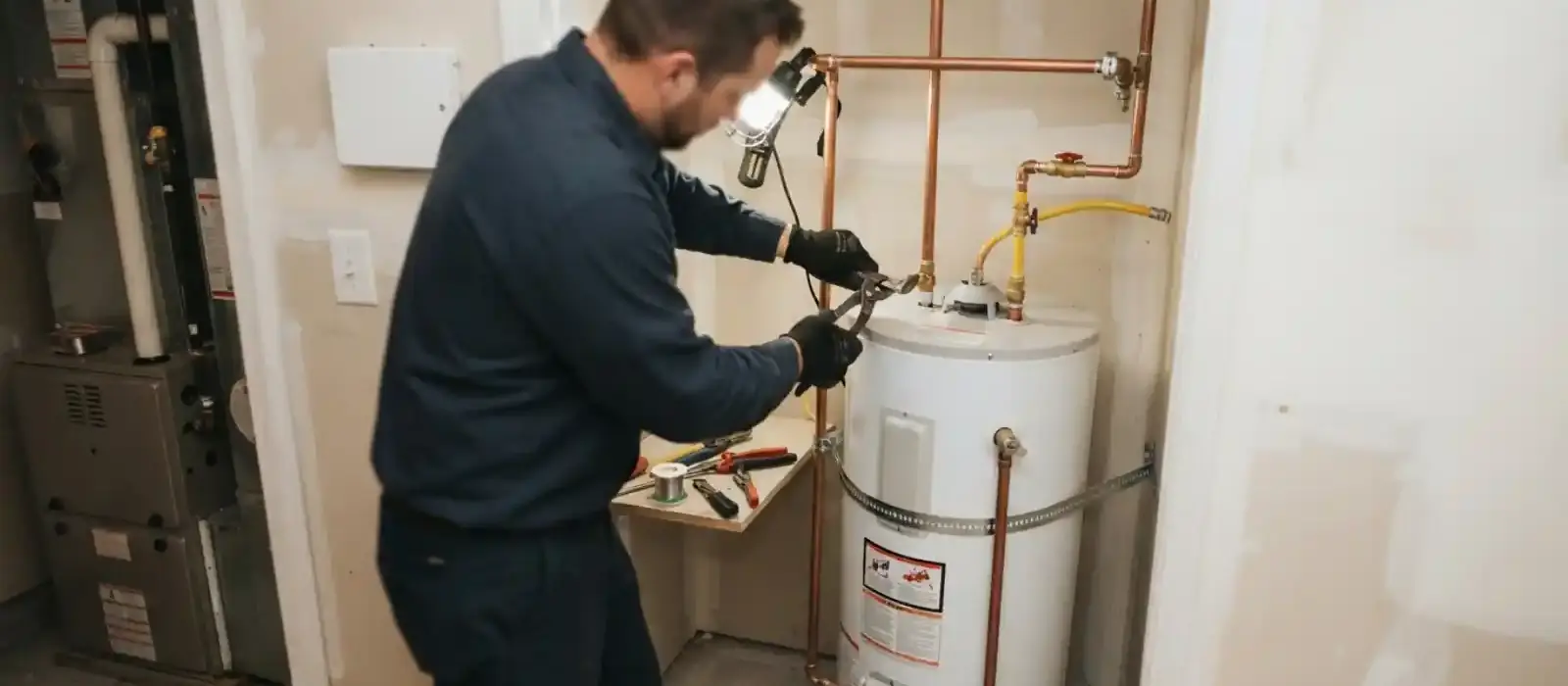
Three vent systems side by side
The type of vent decides the pipe, the routing and the cost, so it is the first thing to settle before ordering a new heater.
| System | How exhaust leaves | Common pipe | Where it fits |
|---|---|---|---|
| Atmospheric (draft hood) | Hot flue gas rises by buoyancy through a chimney or vertical vent | Type B double-wall vent, or a lined masonry chimney | Homes with a working chimney and a short, mostly vertical run |
| Power vent | A fan in the heater pushes exhaust through a small-diameter pipe | PVC, CPVC or approved plastic, per the maker | Basements or rooms with no chimney, where the pipe goes out a sidewall |
| Direct vent | Sealed combustion with intake and exhaust pipes, sometimes coaxial | PVC, CPVC, stainless or polypropylene per the maker | Tight spaces, mechanical rooms and homes that want sealed combustion |
| Tankless gas, condensing | Condensing exhaust is cool and acidic | PVC, CPVC, polypropylene or stainless | Newer high-efficiency tankless installations |
Always follow the installation manual for the exact heater, since approved materials and maximum run lengths are set by the manufacturer.
Atmospheric venting: simple but fussy
An atmospheric heater has a draft hood on top, a metal skirt that lets room air mix with exhaust and break the pull of the chimney. Warm flue gas rises on its own, so the system has no fan or electrical connection and depends on pipe slope, height and an unblocked chimney.
That also makes it sensitive. A cold chimney, a tightly sealed house, a bathroom exhaust fan or a clothes dryer can pull air the wrong way and spill exhaust into the room, a condition called backdrafting. If a flame flickers toward the hood or the draft hood is scorched, treat it as a safety defect and call for service.
PVC, stainless steel or B-vent
Each material is rated for a particular exhaust temperature, so the heater decides the pipe. Mixing them or substituting by price is where installations go wrong.
Plastic pipe (PVC, CPVC, polypropylene)
- Used for power vent and condensing units whose exhaust is relatively cool.
- Light, easy to route through a sidewall and joined with the cement or fittings the maker specifies.
- Not suitable for atmospheric heaters, which exhaust much hotter air.
- Must be supported and sloped as the manual directs.
Metal pipe (stainless steel, Type B)
- Type B double-wall is the standard for atmospheric gas heaters and ties into a chimney or a roof cap.
- Stainless steel resists the acid in condensing exhaust and handles higher temperatures.
- Heavier and more labor to route, but durable.
- Must keep specified clearances from wood framing.
Need a vent run checked?
Call (508) 389-4045 and describe the heater, the chimney and the room. A plumber can tell you what vent system fits.
Installation basics in general terms
Exact numbers come from the heater manual and the code, and a licensed plumber works from those. The principles below explain what an inspector looks at.
- Slope: horizontal runs rise toward the outlet so exhaust and condensate move the right way. Condensing and some power vent systems slope back toward the unit so condensate drains instead of pooling.
- Clearances: vent pipe keeps a specified distance from combustible material such as framing, insulation and stored items.
- Termination: the outdoor end sits a minimum distance away from windows, doors, soffit vents, meters and other openings, and above expected snow levels.
- Support: pipe is hung or strapped at intervals, so joints are not under load.
- Combustion air: a heater in a closet or tight utility room needs enough air to burn properly, or a direct vent that brings its own.
- Condensate: a condensing system needs a drain, and sometimes a neutralizer, to handle acidic water.
This list is for understanding. It is not a how-to, because a vent pipe is part of a life-safety system.
From old vent to new: what the work involves
Most replacements follow the same order, though the details change with the system.
- 1
Evaluate the existing setup
The plumber checks the chimney or sidewall opening, the gas supply, and signs of past backdrafting such as rust or soot.
- 2
Pick the vent system
If the old chimney is oversized, cracked or shared, a power vent or direct vent may be the better route.
- 3
Install and connect
Pipe is cut, fitted, supported and joined per the manual, then connected to the heater with the proper transitions.
- 4
Seal and terminate
Wall penetrations are sealed, and the termination cap is placed with required clearances.
- 5
Test combustion and draft
The plumber checks that exhaust leaves through the vent, leak-tests gas joints and confirms operation.
- 6
Inspection
A permit is pulled by a licensed plumber and the town inspector signs off.
Carbon monoxide is the reason venting is not DIY
Carbon monoxide is colorless and odorless, and a vent that leaks, backdrafts or is poorly joined can send it into living space. Symptoms such as headache, dizziness and nausea in several people at once, or in pets, are a warning.
Install working CO alarms on each level and near sleeping areas, test them monthly, and replace them on the maker's schedule. If an alarm sounds, get everyone outside into fresh air and call emergency services. Do not go back in to look for the cause.
Why this is licensed work in Massachusetts
Massachusetts regulates plumbing and gas fitting under the Fuel Gas and Plumbing Code, 248 CMR 10.00, and permits under 248 CMR 3.05. Section 3.05 requires a permit before plumbing or gas work is installed, altered, removed, replaced or repaired, and permits are issued only to properly licensed individuals, not apprentices.
In Wareham, the Inspectional Services office at Memorial Town Hall, 54 Marion Road, handles plumbing and gas permits, with an online permitting option. The same section lets the inspector act on an application within two working days, so a venting job starts with paperwork and ends with inspection. A homeowner can check a plumber's license through mass.gov's license lookup before hiring.
Source type: Massachusetts 248 CMR 3.05 and Wareham Inspectional Services
Replacing a heater when the vent is the hard part
Many old Wareham homes were built around 1969 or earlier, and chimneys from that era can be unlined, oversized for a modern efficient heater, or shared with a boiler. A modern gas water heater often draws less heat up the flue, which can leave a cold chimney that condenses and corrodes.
That is why a swap sometimes triggers a vent change, and it is covered in water heater installation when a unit moves to a new system. If the old tank is simply failing, water heater replacement is the starting point, and the plumber will say whether the vent can stay.
Salt air, seasonal use and vent upkeep
Houses near the water see more corrosion on metal vent terminations and fasteners. A seasonal cottage may sit for months with a cold chimney that gathers debris, nests or moisture, so inspect the vent before the first lighting of the season.
Homes in Bourne and Marion along Buzzards Bay face similar conditions. Keep the outdoor termination clear of snow, leaves and storage, and never block the combustion air opening around the heater.
What to do about vent and carbon monoxide safety
A few steps reduce damage and risk, and they apply whether or not a plumber is on the way.
- Test carbon monoxide alarms near bedrooms and the heater, and replace any that have expired.
- Look for soot, rust streaks or a loose joint at the vent, and do not tape over a gap yourself.
- Never use a heater whose vent is blocked, disconnected or sagging.
- If an alarm sounds or you feel dizzy, get everyone outside and call 911 before anything else.
Frequently asked questions
A power vent uses a fan to push exhaust out through a small pipe, but it draws combustion air from the room. A direct vent is sealed and brings combustion air from outdoors through a separate pipe. Both can be routed through a sidewall without a chimney.
No. PVC suits power vent and condensing units whose manufacturer approves it. An atmospheric heater exhausts much hotter gas and needs Type B vent or a lined chimney. The manual for the heater names the approved materials.
Slope keeps exhaust and condensate moving the right way. Atmospheric vents rise toward the outlet, while condensing systems slope back so condensate drains to a trap. The manual and code give the allowed range.
Under 248 CMR 10.00 and 3.05, gas and plumbing work needs a permit issued to a licensed individual. Venting also carries a carbon monoxide risk. A licensed plumber should install and test it.
Signs include soot or scorching around the draft hood, a flame that leans toward the hood, rust on the flue, and a CO alarm going off. Turn off the heater and ventilate the room, then call a plumber.
The permit inspection normally looks at the vent along with the gas connection and relief valve. Contact Wareham Inspectional Services at Memorial Town Hall for current local procedures.
Sometimes. A chimney must be properly sized and lined and free of blockage for the new unit. If it is not, a power vent or direct vent through the wall is the usual alternative.