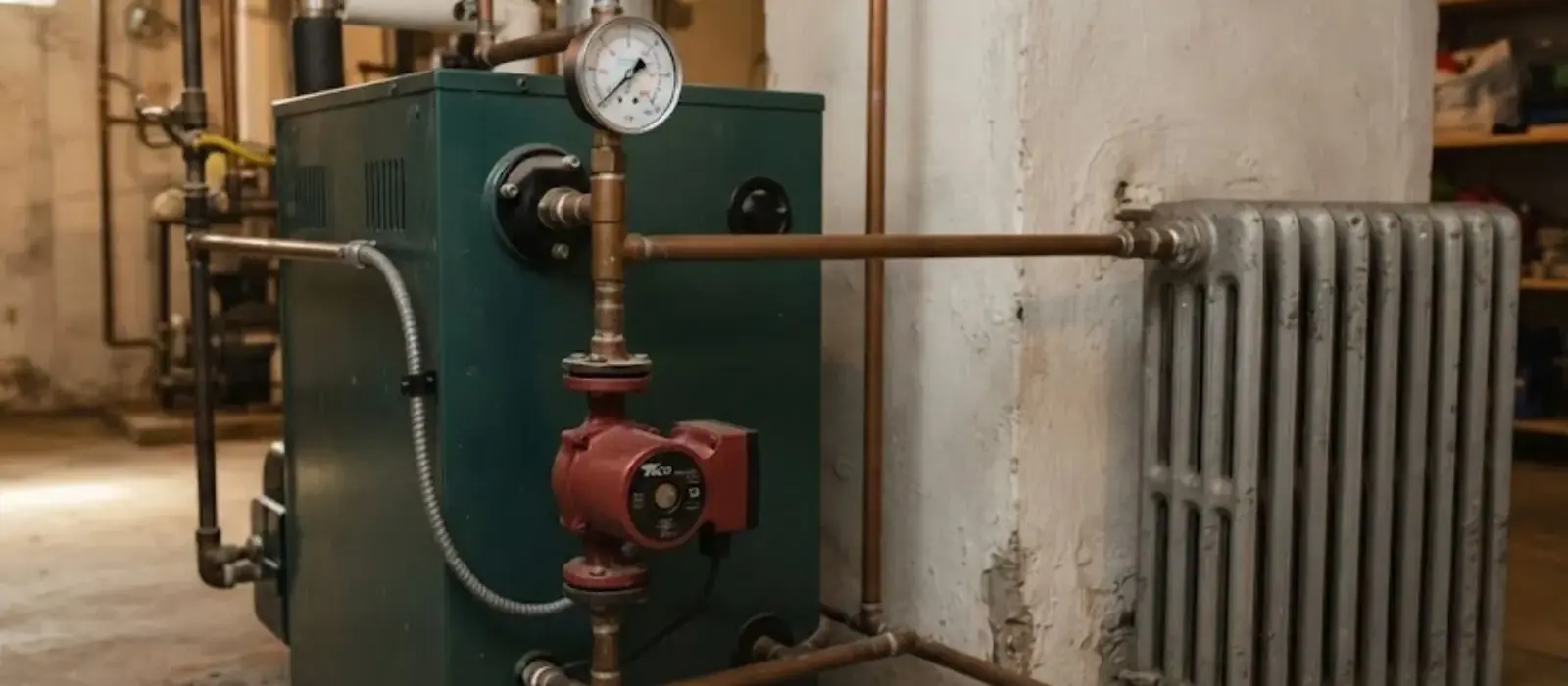
When a boiler problem is an emergency
Safety comes first, then heat. Work through the list in order and call the 24/7 line once you are safe.
- You smell gas, or a carbon monoxide alarm sounds. Leave the building with everyone inside, call your gas utility or 911 from outside, and do not turn lights or switches on or off. We come after the utility says it is safe.
- There is heavy water around the boiler or a pipe is spraying. Close the cold water feed to the boiler and shut the power at the switch if the floor around it is dry.
- The boiler is making loud banging or a steady hissing, or the pressure gauge is climbing into the red. Turn the boiler off at its service switch.
- Oil is on the floor near an oil-fired unit. Shut off the burner switch and keep flames and sparks away.
- The house has no heat in freezing weather. Frozen pipes can follow within hours in a cold, empty building.
Night, weekend and holiday calls go to the same 24/7 line, and we offer same-day appointments when a slot is open. Say whether the boiler burns oil or gas when you call.
What the boiler is telling you
The way a boiler fails points to the cause. These are the symptoms we hear and what is usually behind them.
No heat, boiler is cold
A tripped power switch, a failed thermostat, a dead circulator, a low-water cutoff that has locked out, or a burner that will not ignite.
Boiler runs but rooms stay cold
Air in the loops, a stuck zone valve, a failing circulator pump or a closed valve.
Pressure too high or too low
A failed expansion tank or a leak. A relief valve that drips is warning you, so leave the discharge open.
Banging, kettling or gurgling
Scale or sludge in a hydronic boiler, trapped air or a pump moving too much water.
Water on the floor
A weeping fitting, a failing relief valve, a pinhole in the heat exchanger or a leaking circulator flange.
Short cycling
Oversized boiler, a bad sensor or a clogged flue. It wears the burner out quickly.
How we diagnose a boiler
The first step is simple, which is to find out whether the boiler is getting what it needs. We check the thermostat call for heat, the power and emergency switch, the water level and pressure, and the fuel supply.
After that comes the working parts. A plumber looks at the circulator, the zone valves, the expansion tank and the relief valve. On a gas unit the ignition, flame sensing and venting are checked too, and on an oil unit the burner, nozzle and filter are part of the burner service. If the fault sits outside what we repair, we say so and tell you what kind of tech to call.
Common boiler repairs
Your boiler may need more than one of these. The table shows the part, why it fails and what the repair involves.
| Part | Symptom | What the repair involves |
|---|---|---|
| Circulator pump | Boiler hot, radiators cold, noise | Isolate, drain, replace the pump and flanges, bleed air |
| Zone valve or zone controller | One zone cold | Replace the valve head or the valve body |
| Expansion tank | Pressure swings, relief valve drips | Check air charge, replace a waterlogged tank |
| Pressure relief valve | Drips or discharges | Replace the valve and trace why pressure rose |
| Low-water cutoff | Lockout, no heat | Test and replace the control after checking the water level |
| Thermostat or aquastat | Unit does not respond | Test and replace the control |
| Leaking fitting or radiator valve | Slow drip, wet floor | Tighten or repack the valve, or replace the section |
No heat and it is freezing?
Call the 24/7 line, say whether it is oil or gas, and we book the next open licensed plumber.
Boiler leaking or banging?
Switch it off at the service switch, close the water feed and call. The 24/7 dispatcher books a licensed plumber for your address.
Safe checks while you wait
These checks are safe for most owners. Stop right away if you smell gas or oil, hear a hiss or see scorching.
- 1
Check the thermostat
Make sure it is set to heat and above the room temperature. New batteries solve more calls than people expect.
- 2
Look at the power switch
There is usually a service switch near the boiler or at the top of the cellar stairs. A kicked switch is an easy fix.
- 3
Read the pressure gauge
A cold hydronic boiler typically sits around the manufacturer's stated range. Do not add water if the number is high.
- 4
Check the fuel
For oil, look at the tank gauge. For gas, confirm other gas appliances work.
- 5
Note the display
Write down any code or blinking light for the plumber.
Gas, oil and carbon monoxide
Gas and oil boilers produce exhaust that must go outside. A cracked flue, a blocked chimney or a failed vent fan can push carbon monoxide into the living space, and a working CO alarm on each level of the home is the best protection.
In Massachusetts, gas piping and fittings fall under the Fuel Gas and Plumbing Code, 248 CMR 10.00, and gas work needs a licensed professional. If you notice a gas smell, we will not ask you to troubleshoot it. Leave first, call the utility, then call us.
What affects the price of a boiler repair
A clear price comes before the work starts. These are the usual drivers.
If the heat exchanger has failed, or the unit repeats the same problem, the honest answer may be a replacement. We lay out the repair and replacement options side by side.
Wareham heating, cottages and power outages
Wareham has a large seasonal housing stock, and a cottage that heats only on weekends needs a plan for freezing weather. A boiler that is shut off with water in the system can burst pipes, so drain-down or a low-temperature setting should be a decision, not an accident. A frozen line after a cold snap is a job for burst pipe repair.
Boilers also need electricity for the circulator, controls and burner. Hurricane Bob in 1991 left more than 60 percent of residents in southeast Massachusetts and southeast Rhode Island without power, and any long outage can stop heat even when the fuel is fine.
Source type: National Weather Service
Water heaters and other loops
Some homes use the boiler to heat domestic hot water through an indirect tank, so a boiler outage can mean no hot water too. If the tank itself is the problem, see water heater replacement, and we also serve customers in Rochester and nearby towns.
Frequently asked questions
Yes. The line is answered 24/7, including nights, weekends and holidays. Tell the dispatcher whether the boiler burns oil or gas and what you see, and the next open licensed plumber is booked. Same-day appointments are offered when a slot is available.
Leave the house at once, taking everyone with you, and call your gas utility or 911 from outside. Do not use switches, phones or lighters inside. Call us after the utility says the house is safe.
Common causes are a weeping fitting, a relief valve that has opened, a circulator flange or a corroded heat exchanger. A plumber finds the source before anything is replaced, because the cause decides the repair.
The expansion tank may be waterlogged, the fill valve may be leaking by, or the system may be overheating. Do not add water. Turn the boiler off and call.
Trapped air, a failed circulator or a stuck zone valve are the usual causes. Bleeding the radiators helps if air is the culprit, though a pump or valve fault needs a plumber.
Tell us the fuel when you call. We repair the water side of both, which means pumps, valves, tanks and piping, and we are open about who handles the burner side.
In Massachusetts, plumbing and gas work needs a permit pulled by a licensed professional under 248 CMR 3.05. Permit rules and timing go through the Wareham Inspectional Services inspectors, and your plumber handles the application.
Yes, switch it off at the service switch and close the water feed to the boiler. Leave the pressure relief valve discharge open and clear.