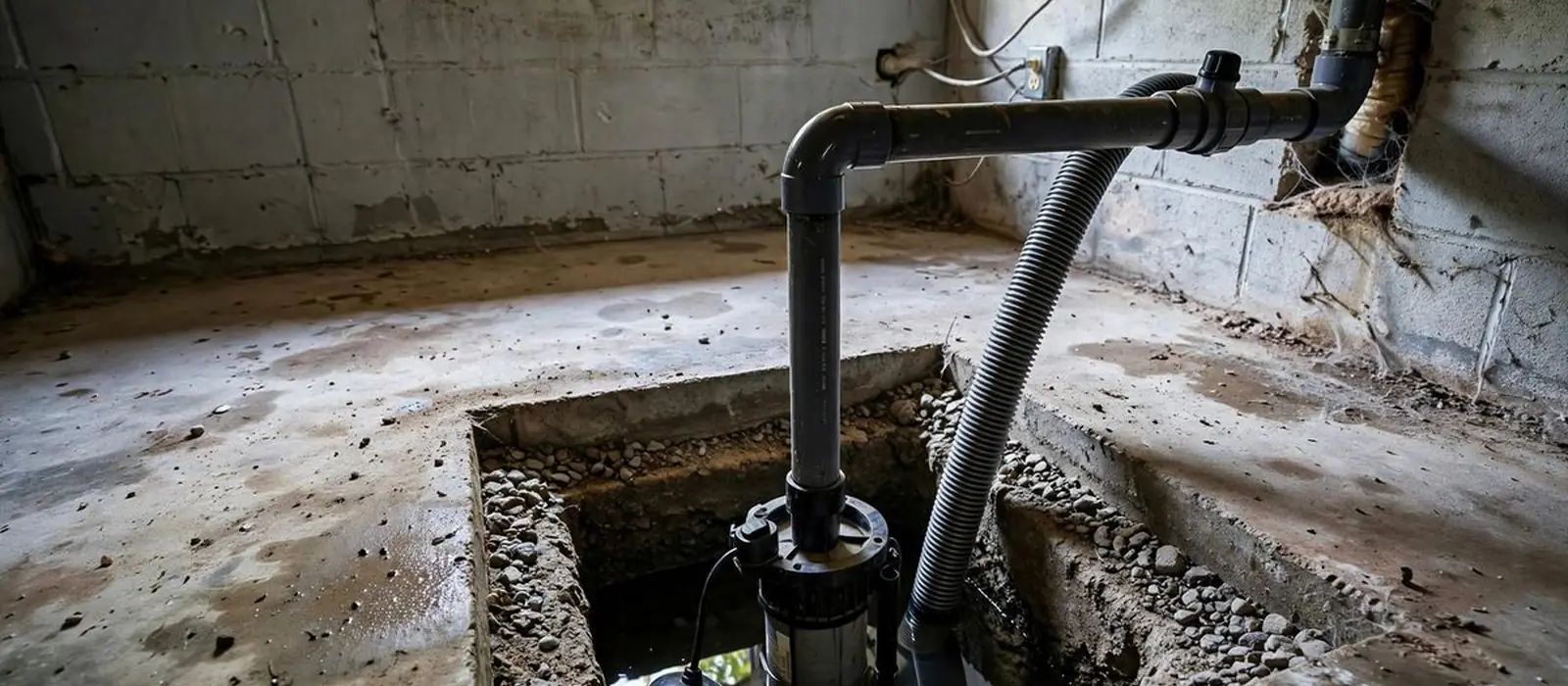
Signs the discharge line is the problem
A pump that runs is not proof the system works. These signs point at the pipe after the pump, not the pump itself.
- The pump runs continuously or cycles on and off every few seconds while the pit stays full.
- You hear water rushing back into the pit after each cycle, which means a failing or missing check valve.
- Nothing comes out at the exterior outlet during a heavy rain or snowmelt, even though the pump is running.
- The outlet is surrounded by ice, or a hose or pipe extension looks sagged, crushed or disconnected.
- Soil is washed out near the foundation where the pipe exits, or a puddle forms near the wall.
- The pump motor is hot to the touch, which means it is working against a blocked line.
If water is rising toward the floor and the pump will not move it, turn off power to anything standing in water at the panel only if the floor around the panel is dry, then call for help with sump pump service.
Frozen discharge lines in a coastal winter
Freezing is the most common winter failure. The water standing in the above-ground pipe or a short exterior extension turns to ice, and that plug blocks the whole line. A mild day followed by a hard freeze is worse than a steady cold, because the pump runs on thaw and refills the pipe just before it freezes.
On the coast the pattern is freeze, thaw, rain, repeat. Near-freezing temperatures with wet snow or rain let the pit fill quickly while the outlet is glazed over. A plumber thaws a frozen run with controlled warmth, never an open flame, and then fixes the cause, which is usually pitch, exposure or a missing freeze-relief opening.
Fixing a frozen line the safe way
Thawing is only the first step. The same line will freeze again unless the cause is corrected.
- 1
Turn off the pump
Running a pump against ice can burn out the motor and break the discharge pipe or the check valve.
- 2
Find the ice
The plug is almost always in the exposed section outside, or in a low spot where water sits between cycles.
- 3
Thaw gradually
Warm towels or a hair dryer on low heat work. A plumber may use a steamer. Never use a torch or hot flame on plastic pipe.
- 4
Restore flow and test
With the line open, the pump is restarted and water is watched leaving the outlet.
- 5
Correct the cause
Add pitch so the pipe drains, shorten the exposed run, or add a freeze-relief hole or a larger-diameter outlet.
Sump pump running but pit still full?
Call (508) 389-4045 and tell the dispatcher what the outlet looks like. Same-day appointments are offered when a slot is open.
Clogged, cracked or disconnected
Not every failure is ice. Here is how the other causes differ and what repair usually involves.
Clogged or kinked line
- Silt, leaves, roots or a crushed or kinked flexible hose block flow.
- A plumber may clear it with a cable or flush it with water and re-lay the pipe with a smooth path.
- A small screen or cap at the outlet can help, as long as it will not trap ice.
Cracked or disconnected line
- Frost heave, a lawnmower strike or settled soil can crack the pipe or pull a coupling apart.
- Water then discharges next to the foundation and flows back, making the pit refill.
- Repair is a new section, rubber couplings or a new run, glued or clamped per the pipe type.
- If water is also soaking into a wall or slab, leak detection can trace where it is escaping.
The check valve: a small part with a big job
A check valve is a one-way valve on the discharge pipe just above the pump. It stops water in the vertical pipe from falling back into the pit after each cycle, which would make the pump restart over and over.
A failing valve sounds like a thud or rush after the pump stops. It is installed with rubber couplings and hose clamps, so it can be swapped without cutting the pipe. A valve installed backward or missing altogether is a common cause of short cycling. Some pump makers also call for a small weep hole in the pipe below the valve to prevent air lock, so follow the manual for your pump.
Where the water should and should not go
General rules help, but the right spot depends on your lot. Ask the Wareham Inspectional Services office or the Conservation Commission about local rules, since rules on discharge near wetlands and neighbors vary.
| Destination | General guidance | Why it matters |
|---|---|---|
| Away from the foundation, downhill, onto lawn or a drainage swale | Usually the preferred option | Water that returns to the foundation re-enters the pit |
| Dry well or a buried leaching pit | Sometimes used where a sloped yard does not exist | Needs suitable soil and space, and a high water table can defeat it |
| Onto a neighbor's property | Avoid | Creates drainage disputes and liability |
| Into a sanitary sewer or septic system | Avoid | Clear groundwater should not be sent to a sanitary sewer or septic field |
| Into the street or a storm drain | Check local rules first | May be restricted, and winter ice is a hazard |
The discharge should end well clear of the house, on ground that slopes away, and not where it will freeze across a walkway or driveway.
Why storm surge and power loss matter here
Hurricane Bob in August 1991 sent a surge of 10 to 15 feet into Buzzards Bay, with the highest levels of 12 to 15 feet recorded at the head of the bay in Onset, Bourne, Mashpee and Wareham. More than 60 percent of southeastern Massachusetts and southeastern Rhode Island lost power.
That is a reminder for low-lying Wareham properties that heavy storms can raise the water table and take out power at the same moment. A discharge line that runs freely, a working check valve and a battery backup pump are the three things that matter most when the grid fails.
Source type: National Weather Service Boston, Hurricane Bob summary
What affects the repair price
A clear price is given before work starts. These are the usual drivers.
Prevention before the next freeze
Walk the line each fall and look for a pipe that is cracked, pinched or lying flat. Keep the outlet clear of leaves and snow, and make sure a discharge extension slopes away from the house, with no sags that can hold water.
Test the pump before spring thaw by pouring a bucket of water into the pit and watching it empty. If you own a seasonal home in Bourne or Carver, ask someone to check the pit once a month while you are away.
What to do when the discharge line is blocked or frozen
A few steps reduce damage and risk, and they apply whether or not a plumber is on the way.
- Switch the pump off at its plug if it is running against a blocked or frozen line.
- Do not pour boiling water on a frozen plastic line, and do not use a flame or heat gun on it.
- Move stored items off the basement floor and keep clear of outlets near standing water.
- If the water is rising, call right away and ask about a temporary discharge route.
Frequently asked questions
The usual cause is a blocked discharge line, from ice, silt, a crushed section or a stuck check valve. A pump that runs hot and cycles often is working against the blockage. Turn it off if it is making unusual noises and call a plumber.
Turn the pump off first, then warm the pipe gradually with towels soaked in warm water, or a hair dryer on low. Never use an open flame, especially on PVC. A plumber can use a steamer, and should also fix the reason it froze.
It keeps water in the discharge pipe from flowing back into the pit after the pump shuts off. Without it the pump restarts constantly and wears out. If you hear a rush after each cycle, the valve is likely failing.
Generally well away from the foundation and downhill, on ground that slopes away, and not into a sanitary sewer or septic system. Local rules vary, so ask Wareham Inspectional Services if you are near wetlands or a neighbor's lot.
Short sections near the wall can be replaced with couplings and new pipe. A crack in a long buried run may need excavation. A plumber can usually tell from where water is surfacing.
Hurricane Bob in 1991 drove a 12 to 15 foot surge to Onset and Wareham at the head of Buzzards Bay, and most of the region lost power. Backup power for the pump is a sound precaution in storm-prone low areas.