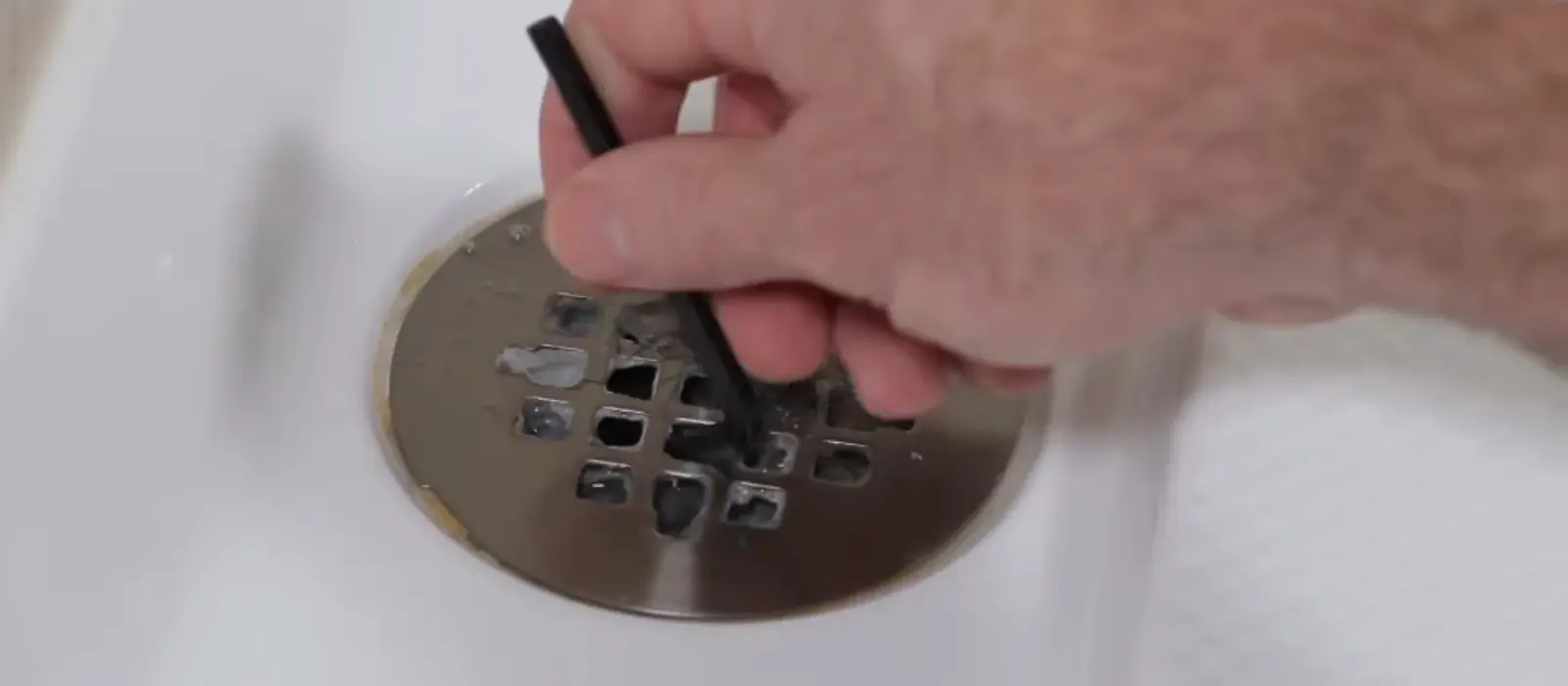
What baking soda and vinegar can and cannot do
The fizzing looks powerful, but the reaction is mild. Baking soda is a weak base and vinegar a weak acid, and together they make carbon dioxide, water and a little sodium acetate.
What it can do
- Loosen a light film of soap scum and grease on the pipe wall
- Knock back odor from a trap that smells musty
- Help a plunger or hot-water flush work a bit better
- Act as a gentle monthly refresh for a drain that runs fine
What it cannot do
- Dissolve hair, which is mostly keratin and does not react
- Break up a dense grease plug or a paper wad
- Clear tree roots in a buried line
- Fix a bellied, cracked or offset pipe
The method, if you want to try it
Use this on a slow but still running drain. If water is standing and not moving at all, skip straight to a plunger or a plumber.
- 1
Clear what you can
Remove the stopper or strainer and pull out any hair or debris you can reach by hand.
- 2
Flush with hot tap water
Run the hot tap for a minute to warm the trap. Use tap water, not a boiling kettle, if you have PVC.
- 3
Add baking soda
Pour about half a cup down the drain, working it in with a spoon so it does not sit on the strainer.
- 4
Add vinegar
Pour in a cup of white vinegar and plug the drain opening with a stopper or wet rag so the fizz works downward.
- 5
Wait, then flush
Leave it for 15 to 30 minutes, then run hot tap water for a couple of minutes to carry loosened film away.
Drain still slow after the fizz?
Call the 24/7 line. A dispatcher books a licensed plumber with a cable and a camera to find out what is actually blocking the line.
Cautions before you pour anything
Most household drain injuries come from stacking one treatment on another. Keep these rules.
- Never mix baking soda and vinegar with a commercial drain cleaner. Residue from lye or acid products can react with vinegar and splash back from the opening.
- Never follow a store-bought cleaner with another one. If a chemical product failed, tell the plumber what you used and when.
- Skip boiling water on PVC and ABS. Plastic drain pipe softens at high temperature, and joints can loosen. Hot tap water is safe.
- Do not pour boiling water into a cold porcelain sink or toilet, since the sudden heat can crack it.
- Wear gloves and eye protection, and keep the room ventilated.
- Do not seal the vinegar and soda in a closed container or pipe, since pressure builds.
If a clog has stood for days with standing water, the water in the trap may already contain chemical residue, so avoid skin contact.
Which fix for which clog
Matching the method to the clog saves time, and it keeps you from damaging the pipe.
| Clog type | Where it sits | Home option | When to call |
|---|---|---|---|
| Soap scum film | Bathroom sink trap | Baking soda, vinegar and a hot-water flush | When it keeps returning |
| Hair mass | Tub or shower drain | Hair snare tool or hand auger | When the tool will not reach it |
| Grease buildup | Kitchen drain | Hot water, dish soap and a plunger | When it slows after each flush |
| Paper or wipes | Toilet or branch line | Closet auger or plunger | When several fixtures back up |
| Roots | Buried sewer line | None | Always call, since a camera and cutting head are needed |
Wareham: sewer or septic changes the advice
Wareham's sewer department runs about 61 miles of gravity pipe and 45 pump stations, but the town's housing plan notes that areas north of Route 25 could not be added. If your home is on septic, a clog may sit in the house line, the tank outlet or the leach field, and baking soda only reaches the first few feet. Massachusetts requires a Title 5 inspection when a septic property is sold, so recurring backups are worth sorting out early.
Source type: Wareham Sewer Department and Wareham Housing Production Plan
Septic systems and household drain treatments
A small amount of baking soda is fine in a septic system, since it is gentle and does not kill the bacteria in the tank. Strong commercial cleaners are the real risk, because lye, acid or bleach products can upset the bacteria that digest waste.
On septic, the better habit is prevention. Scrape grease into the trash, use a hair strainer in the shower, and keep wipes out of the toilet even if the package says flushable. Homes in neighboring Carver, where every property uses its own septic system, and in Rochester follow the same rule.
Signs it is more than a home remedy can fix
Gurgling in a tub when the toilet flushes, a basement floor drain that bubbles when the washer runs, or several fixtures slow at once all point to a blockage in the shared line. No amount of fizzing reaches that.
A professional drain cleaning visit starts with a drum cable matched to the pipe size, then a camera if the clog returns. For grease or scale that keeps building up, hydro jetting uses high-pressure water from a jetter nozzle to scour the pipe wall. A clear price is given before work starts.
Why hair and grease beat the fizz
Hair is the leading cause of bathroom clogs, and it is protein, not mineral scale. Baking soda and vinegar do not dissolve it, so the hair mat stays put while foam passes over the top. A plastic hair snare with barbed teeth, pushed down past the stopper, pulls it out in seconds.
Kitchen grease behaves differently. Warm grease runs down as a liquid, then cools and hardens on the pipe wall in the first few feet past the trap. Hot soapy water and a plunger break up a thin layer, but a thick layer needs a cable that scrapes the wall.
Using a plunger and hand auger first
A cup plunger works on sinks and a flange plunger on toilets. Seal the overflow opening with a wet rag, fill the fixture with enough water to cover the cup, and pump with short firm strokes for about 20 seconds before lifting.
If that fails, a 25-foot hand auger reaches past the trap into the branch line. Feed the cable until it meets resistance, crank the handle to hook the clog, and pull slowly. Stop if the cable binds hard, since forcing it can scratch a tub or kink the cable.
A better monthly routine than a weekly fizz
Run hot tap water for a minute after washing greasy dishes. Wipe pans with a paper towel before rinsing. Pull the stopper in bathroom sinks once a month and clean the hair off it. Those three habits prevent more clogs than any foaming treatment.
Do you need a permit to clear a drain?
No. Clearing a stoppage is on the no-permit list in 248 CMR 3.05(1)(c), so you can try a plunger, a hand auger or baking soda without paperwork. Replacing pipe or fixtures is a different story and calls for a licensed plumber.
Frequently asked questions
It can clear a mild film of soap and grease, but it will not break up hair, a paper wad or a dense grease plug. For those, use a plunger, a hand auger or call a plumber.
On metal pipe it is usually fine, but PVC and ABS plastic can soften and joints can loosen. Use hot tap water instead, and never pour boiling water into a cracked or cold porcelain fixture.
No. Commercial cleaners contain lye, acid or other strong chemicals, and mixing products can cause splashing and fumes. If one product fails, wait and call a plumber.
In small amounts, yes. The problem in septic homes is usually harsh commercial cleaners, which can disrupt the tank's bacteria. A Title 5 inspection is also required when a Massachusetts septic property is sold.
Once a month as a refresh is plenty. If you feel the need to use it weekly, something is building up in the line that a plumber should look at.
It can freshen a trap, but a musty smell after months of closure is often a dried-out trap seal. Run water in every drain for a minute first to refill the trap, then try the baking soda treatment.